The moment you realize your entire paycheck is already spoken for before it even hits your bank account is a heavy burden to carry. You’re likely exhausted by the endless cycle of rollover fees and the constant anxiety of seeing your balance drop into the negatives because of automatic withdrawals. It feels like the lenders have more control over your money than you do, especially when aggressive collection calls start following you to work. Finding effective payday loan debt reduction programs isn’t just about managing money; it’s about reclaiming your right to a peaceful night’s sleep without the fear of account seizures or legal threats.
You don’t have to face these predatory lending practices alone. This 2026 guide reveals how specialized programs can consolidate those high-interest traps into a single, predictable monthly payment that actually fits your budget. We’ll show you the exact steps to stop automatic bank withdrawals and lower the total interest you’ll pay over time. By the end of this article, you’ll understand how to bridge the gap between financial turbulence and total agency over your future. It’s time to stop the bleeding and regain control.
Key Takeaways
- Understand how payday loan debt reduction programs replace predatory 300% interest rates with a single, structured payment plan that fits your actual budget.
- Learn the specific steps to revoke ACH authorization and legally stop lenders from making unauthorized withdrawals from your bank account.
- Discover how professional negotiation can compel lenders to waive excessive fees and significantly reduce the total amount you owe.
- Compare different relief strategies to find the path that resolves your debt while minimizing the impact on your long term credit health.
- Identify the essential criteria for choosing a reputable partner, including fee transparency and a proven track record of consumer advocacy dating back to 2004.
What are Payday Loan Debt Reduction Programs?
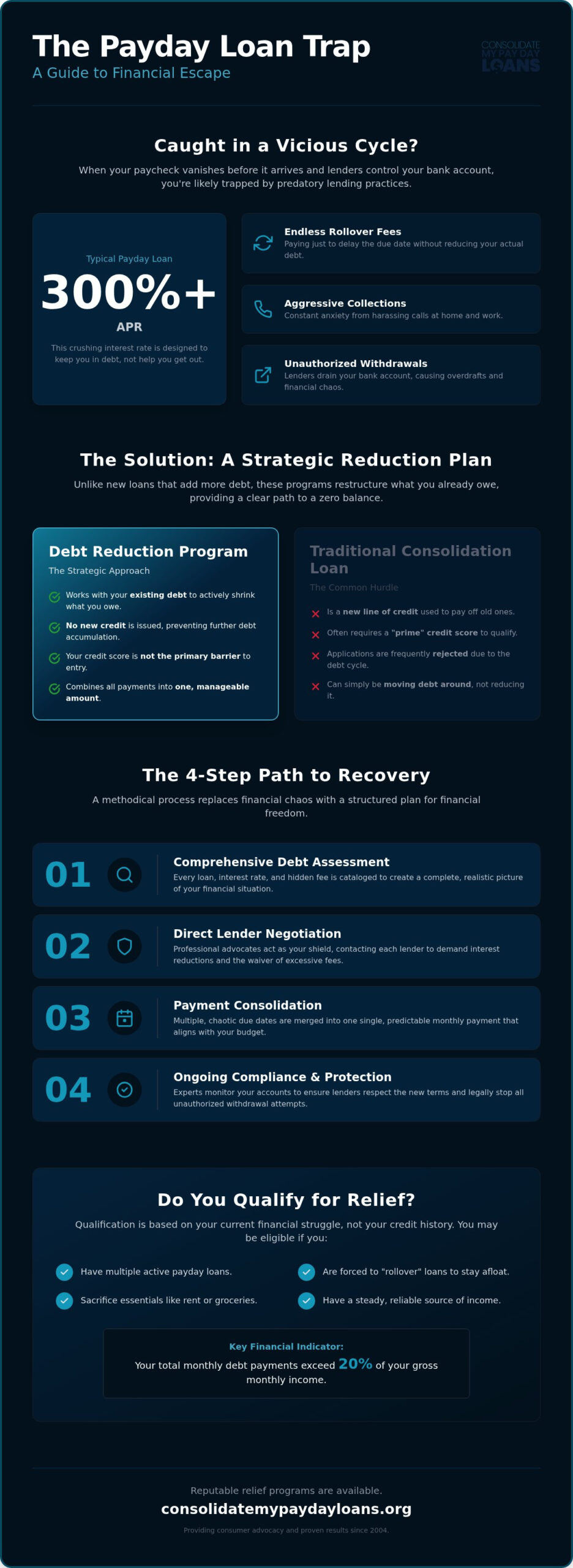
Payday loans are designed to be short term fixes, but they often become long term anchors. When interest rates soar above 300% APR, the math simply stops working in your favor. This is where payday loan debt reduction programs step in. These programs provide a structured system that reorganizes your debt into a single, manageable payment while aggressively targeting high interest rates and fees. Instead of just treading water, you finally start moving toward a zero balance.
It is vital to distinguish between a consolidation loan and a reduction program. A consolidation loan is a new line of credit used to pay off old ones. If your credit score has suffered due to the debt cycle, most traditional banks will reject your application. In contrast, a reduction program focuses on the debt you already have. It uses professional negotiation to change the terms of your existing agreements rather than burying you under a new obligation. An expert advocate acts as your shield during this process. They step between you and the lender to negotiate better terms, often waiving late fees that would otherwise be impossible to satisfy.
The Difference Between Reduction and Traditional Loans
Traditional consolidation usually requires a “prime” credit score that many payday loan borrowers simply do not have. Because payday loan debt reduction programs do not involve issuing new credit, your score is not the primary barrier to entry. This approach prioritizes your ability to pay over your past credit history. It focuses on simplifying your financial life by reducing the total burden. You aren’t just moving money around; you’re actively shrinking what you owe without the need for a bank’s approval.
Who Qualifies for Payday Debt Relief?
Qualifying for relief is less about your credit history and more about your current financial struggle. Most individuals who seek help share a few common traits. They often have multiple active payday loans across different lenders and find themselves forced to “rollover” loans, paying only the interest to delay the due date. When basic living expenses like rent and groceries are being sacrificed to meet loan demands, it is a clear sign that intervention is necessary.
A steady income is the foundation of these programs. You must be able to support a new, lower payment plan to ensure the cycle stays broken for good. Generally, qualification is based on a debt-to-income threshold where your total monthly unsecured debt payments exceed 20 percent of your gross monthly earnings.
How Payday Loan Debt Reduction Works: The Mechanism of Relief
Understanding the internal mechanics of payday loan debt reduction programs is the first step toward reclaiming your financial agency. These programs function as a protective shield between you and the lenders who thrive on your confusion. The process isn’t a quick fix; it’s a methodical restructuring of your obligations to ensure you’re actually paying down debt rather than just funding a lender’s profit margin. Most successful programs follow a clear, four-step progression:
- Comprehensive Debt Assessment: Every active loan, interest rate, and hidden fee is cataloged to create a realistic picture of your situation.
- Direct Negotiation: Professional advocates contact each lender to demand interest rate reductions and fee waivers.
- Consolidation: Multiple, chaotic due dates are merged into one single payment that aligns with your income.
- Ongoing Compliance: Experts monitor your accounts to ensure lenders respect the new terms and stop unauthorized withdrawal attempts.
This structured approach replaces chaos with predictability. It’s about moving from a state of constant reaction to a state of planned recovery. If you’re ready to see how these steps apply to your specific situation, you can start your recovery journey today.
The Negotiation Process with Predatory Lenders
Lenders rely on the “rollover” trap to keep you in debt indefinitely. When you roll over a loan, you’re paying a fee just to stay in the same place. Professional advocates disrupt this cycle by halting aggressive collection tactics and shifting the focus to “principal-focused” repayment. This ensures every dollar you pay actually shrinks the balance. During these negotiations, advocates specifically target the removal of accumulated Non-Sufficient Funds (NSF) fees. These fees often stack up when lenders repeatedly attempt to pull money from an empty account, and getting them waived is a critical part of stopping the financial bleeding.
Consolidating Multiple Due Dates
Predatory lenders thrive on the chaos of multiple due dates. Managing four or five weekly payments often leads to missed deadlines and more penalties. Moving to a single monthly or bi-weekly payment provides immediate psychological relief and financial clarity. You can use a payday loan consolidation calculator to visualize exactly how this new structure fits into your life. By aligning your debt payments with your actual paychecks, you eliminate the risk of overdrafts and ensure your basic living expenses are covered first. It’s a simple change that makes a massive difference in your daily stress levels.
Comparing Relief Options: Consolidation vs. Settlement vs. Management
Choosing the right path through financial turbulence requires more than just a quick search; it requires a strategy. While doing nothing ensures a permanent cycle of high interest and predatory fees, picking the wrong relief tool can lead to unnecessary credit damage. Most payday loan debt reduction programs are designed to offer a middle ground between the chaos of multiple lenders and the finality of bankruptcy. It’s about finding a sustainable pace that respects your budget while holding lenders accountable for their terms.
A primary concern for many is the impact on their credit score. Defaulting on a loan or letting it reach a third party collection agency is significantly more damaging than entering a structured management plan. While some programs may cause a temporary dip in your score, the long term benefit of a cleared balance and a history of on time payments far outweighs the alternative. It’s a trade off for psychological peace and future financial agency. The cost of doing nothing is always higher than the cost of a managed recovery.
Payday Loan Consolidation vs. Debt Settlement
Consolidation is the process of paying back the full principal of your loans but at a drastically reduced interest rate. This approach is generally preferred because it maintains a positive relationship with creditors and protects your credit score. Debt settlement is different. It involves negotiating to pay a lump sum that is less than the total balance owed. This is typically used for accounts that have already been closed or are in severe delinquency. Both options require the guidance of legitimate payday loan consolidation companies to avoid scams that promise impossible results.
The Role of Credit Card Consolidation
Managing multiple types of high interest debt can feel like a game of whack-a-mole. If you’re struggling with both revolving credit and short term loans, credit card and payday loan consolidation can be combined into a single, unified exit strategy. This approach is more effective than treating each debt as a separate problem. By unifying your obligations, you reduce what we call financial noise. You no longer have to track disparate due dates or manage different interest calculations. A unified plan provides a clear, single target for your monthly payments, making it much easier to stay compliant and reach debt freedom faster.
Critical Steps: How to Stop the Bleeding Immediately
When your bank account is under siege, you need immediate defensive tactics. Predatory lenders often use the Automated Clearing House (ACH) system to pull funds the moment your paycheck arrives. This leaves you unable to cover basic necessities like rent or groceries. While enrolling in payday loan debt reduction programs provides a long term solution, you must also take immediate action to protect your cash flow today. It’s about stopping the financial bleeding so you can focus on a permanent recovery.
You should also investigate if your state mandates an Extended Payment Plan (EPP). Many states require lenders to offer this option, which allows you to repay the balance over a longer period without incurring additional interest or fees. Above all, avoid the “new loan” trap. Taking out a fresh high-interest loan to satisfy an old one only deepens the hole and increases your total debt. If you’re feeling overwhelmed by these technical steps, get expert assistance to secure your accounts today.
How to Revoke ACH Authorization Legally
Federal law dictates that lenders cannot legally require ACH as your only payment method. You have the right to change your payment preference at any time. To stop a specific transfer, you must notify your bank at least three business days before the scheduled payment. It’s vital to understand the difference between a “stop payment” and a full “revocation of authorization.” A stop payment order is often temporary and carries a bank fee. In contrast, a full revocation is a permanent legal instruction that forbids the lender from ever accessing your account again. You must send this notice in writing to both the lender and your financial institution to ensure you’re fully protected.
Dealing with Aggressive Collection Calls
You are protected by the Fair Debt Collection Practices Act (FDCPA). This law prohibits collectors from calling you at unreasonable times or contacting your employer. One of the primary benefits of a debt reduction program is that it shifts the burden of communication. Once you’re enrolled, professional advocates take over all correspondence with your lenders. This provides immediate peace and stops the phone from ringing. Keep a detailed log of every call, including the time, date, and the name of the representative. Documenting harassment isn’t just for your records; it provides significant leverage during the negotiation phase. Lenders are much more willing to settle when they know you’re tracking their legal violations.
Choosing the Right Payday Loan Debt Reduction Program
Identifying a trustworthy partner is the final hurdle in your journey toward financial freedom. Not all payday loan debt reduction programs are created equal. You must look for absolute transparency. A reputable company will never charge you upfront fees before any service is rendered. They should also demonstrate longevity. Programs backed by established organizations like Solid Ground Financial, which has been operating since 2004, offer a level of stability and industry relationships that newer startups simply cannot match. You need a guide who understands the specific mechanics of short term lenders rather than a generalist who treats all debt the same. Finally, verify the exit strategy. A legitimate program will provide you with a clear, documented end date for your debt-free status.
Checking the specialization of the company is equally vital. Many agencies handle general credit card debt but struggle when faced with the high-velocity collection tactics of payday lenders. A specialized program understands that time is of the essence when your bank account is being drained. They focus on quick intervention and sustainable management. By evaluating these factors, you ensure that you aren’t just joining another program, but rather partnering with an advocate who has the “insider knowledge” required to win.
Why Consolidate My Payday Loans is the Strategic Choice
General debt relief agencies often lack the specialized expertise required to handle the aggressive tactics used by payday lenders. Consolidate My Payday Loans focuses exclusively on this niche, understanding the unique cycle of rollovers and ACH withdrawals discussed in previous sections. We prioritize payday loan consolidation instead of bankruptcy, offering a more structured and less damaging alternative for your long term credit. Your plan is never a one-size-fits-all solution. It’s a customized strategy built around your specific list of lenders and your actual monthly income.
Starting Your Path to Financial Peace
Taking the first step is often the hardest part, but the process is designed to be straightforward. During your initial consultation, you’ll speak with an advocate who will review your total debt and explain how much you can save using our specialized tools. To make this call as productive as possible, have a few documents ready. You’ll need a list of your current lenders, your most recent bank statements showing the withdrawals, and proof of your steady income. This information allows us to build a precise map of your recovery. You’ve carried this burden long enough. Request a free debt analysis and start your reduction program today.
Take the Final Step Toward Financial Recovery
Breaking free from high-interest debt requires a combination of immediate defensive action and a long term strategic plan. You now understand how to legally revoke ACH authorization to protect your bank account and why choosing a structured repayment plan is a safer alternative to bankruptcy. By utilizing specialized payday loan debt reduction programs, you can transform a chaotic list of multiple lenders into a single, manageable monthly payment that actually reduces your principal balance.
With over 20 years of experience through Solid Ground Financial, we provide the expert advocacy needed to stand up to predatory lenders. You don’t have to guess about your potential savings; our specialized payday loan consolidation calculator offers clear estimates tailored to your specific situation. It’s time to replace the stress of collection calls with the peace of a customized relief plan. Get a Free Payday Loan Debt Analysis Now and start your journey toward a debt-free life. You have the power to stop the cycle, and we are here to help you do it.
Frequently Asked Questions
Can I really consolidate my payday loans without taking out a new loan?
Yes, you can consolidate without a new loan by enrolling in a management program. These payday loan debt reduction programs focus on restructuring your existing obligations rather than adding new ones. Instead of borrowing more money to pay off old lenders, an advocate negotiates directly with your creditors to lower interest rates and waive fees. This creates a single, sustainable payment plan based on what you can actually afford each month.
How do I stop payday lenders from taking money out of my bank account?
You stop automatic withdrawals by revoking your ACH authorization. Federal law gives you the right to stop these payments at any time. You must notify your bank at least three business days before the scheduled transfer. It’s best to provide this notice in writing to both the lender and your financial institution. This legal step ensures you maintain control over your paycheck and prevents lenders from draining your account before you pay for essentials.
Will a payday loan debt reduction program ruin my credit score?
Enrolling in a program may cause a temporary dip in your credit score, but it’s far less damaging than a default or account seizure. When you stop the cycle of rollovers and focus on principal repayment, you’re building a foundation for long term credit health. Successfully completing a program shows a history of resolved obligations. This is a strategic trade off to achieve psychological peace and total agency over your financial life.
What happens if I can’t pay my payday loans anymore?
If you stop paying without a structured plan, you’ll likely face aggressive collection calls and mounting late fees. Lenders may attempt to withdraw funds repeatedly, causing expensive overdraft charges at your bank. In some cases, they might even threaten legal action or sell your debt to a third party agency. Specialized payday loan debt reduction programs provide a safe alternative to this chaos by establishing a professional barrier between you and the lenders.
How long does it typically take to complete a payday debt reduction program?
The duration of a program typically ranges from 6 to 24 months, depending on the total amount you owe and your monthly budget. Each plan is customized to fit your specific financial situation. Your advocate will provide a clear, documented end date so you know exactly when you’ll be debt free. This methodical approach ensures the payments stay manageable while you work steadily toward regaining your personal financial agency.
Can I consolidate both payday loans and credit card debt at the same time?
Yes, you can combine both types of unsecured debt into a single, unified strategy. Managing your obligations together is often more effective than trying to handle them piecemeal. This approach reduces financial noise by creating one clear target for your monthly payments. By unifying your high interest credit card balances with your payday loans, you simplify your recovery and move toward a zero balance with greater efficiency and less stress.
Are these programs available if I have already defaulted on my loans?
Yes, relief programs are still available even if your loans are already in default. While it’s better to act early, professional advocates have extensive experience negotiating with third party collection agencies. They can often secure settlements or repayment plans that would be difficult to obtain on your own. It’s never too late to seek help and stop the cycle of aggressive calls and mounting interest that follows a default.
What is the difference between a payday loan hardship program and consolidation?
A hardship program is usually an internal arrangement offered directly by a single lender to provide temporary relief. In contrast, consolidation is an external, advocate led strategy that manages multiple loans simultaneously. Consolidation provides a more comprehensive solution by unifying all your debts into one manageable payment. While a hardship plan might help for one month, a consolidation program offers a permanent exit strategy from the high interest lending cycle.