
What if the payday loan you haven’t thought about in a decade isn’t the legal threat a debt collector claims it is? It’s a terrifying moment when a voice on the phone threatens to empty your bank account over a debt from ten years ago. You feel the familiar surge of panic and the heavy weight of a mistake you thought was long behind you. You aren’t alone in this struggle. Finding payday loan collection relief starts with knowing that you have rights that don’t expire, even when the debt feels permanent. You deserve to live without the constant fear of a ringing phone or a depleted checking account.
We’re here to help you reclaim your financial agency and stop the harassment for good. You’ll learn exactly how the statute of limitations works in your state and why a ten-year-old debt might be legally time-barred from a lawsuit. This guide explains the mechanics of collection limits and introduces you to proven strategies for resolving these obligations for less than what the collectors demand. We’ll explore how consolidation can act as a protective shield, allowing you to move from a state of fear to a position of total control over your financial future.
Key Takeaways
- It’s vital to recognize that most states limit the legal timeframe to sue for debt to three to six years, meaning a decade-old loan is often unenforceable.
- Achieving payday loan collection relief involves more than just waiting; it requires a strategic plan to address aggressive collectors and predatory interest.
- You don’t have to tolerate unauthorized bank withdrawals because you have the legal right to revoke ACH access and protect your paycheck.
- Discover why professional consolidation is a safer alternative to waiting out the statute of limitations, especially when facing potential wage garnishment.
- Use a payday loan consolidation calculator to see exactly how you can resolve your debt for less than what you currently owe.
The Reality of Payday Loan Collection Relief and Long-Term Debt
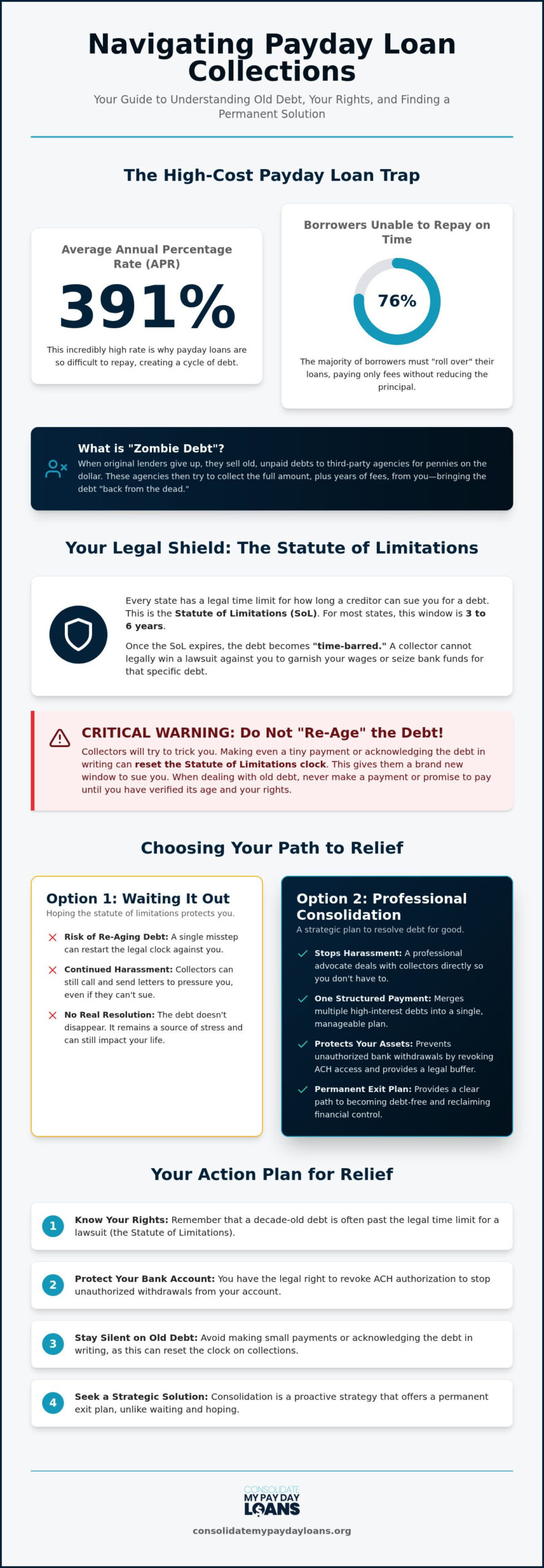
The reality of long-term debt is that it rarely disappears on its own. Instead, it evolves. Payday loan collection relief is a strategic approach to managing or eliminating this predatory debt before it consumes your financial future. To find the right path, you must first understand the mechanics of the industry. What is a payday loan? At its core, it’s a high-cost, short-term obligation that often carries an average national APR of 391%. These loans are uniquely difficult to shake off because they rely on a cycle of rollovers. Data indicates that 76% of borrowers cannot afford to repay the loan in full when it’s due. This creates a psychological burden that feels like a permanent weight.
Many borrowers find themselves trapped in a loop where they’re only paying fees without ever touching the principal. This cycle can last for months or even years, leading to a sense of total hopelessness. When the original lender eventually gives up on collecting, the debt doesn’t simply vanish. It’s often bundled with thousands of other accounts and sold to third-party collection agencies. These companies specialize in pursuing old debt, often long after you’ve forgotten the original transaction. This transition from a local lender to a national debt buyer marks a shift in how the debt is handled and how you must respond to find relief.
Why Payday Lenders Pursue Debt for Years
Lenders don’t just forget about unpaid balances. They often sell these accounts to third-party agencies in a massive secondary debt market. These agencies buy your old debt for pennies on the dollar and then use aggressive tactics to collect the full amount, plus years of accrued interest. This is known as “zombie debt.” These collectors hope you don’t know your rights or the legal timelines for collection. A small loan from a decade ago can balloon into a massive figure because of the way fees compound over time. Even if the debt is technically too old for a court case, collectors will still try to pressure you into a small payment to restart the legal clock.
The Difference Between Debt Relief and Debt Consolidation
Choosing the right strategy requires knowing the difference between broad relief and specific consolidation. Effective payday loan relief focuses on stopping the immediate harassment and protecting your assets from predatory withdrawals. It’s about finding breathing room. Consolidation is the methodology we use to merge multiple high-interest obligations into a single, structured payment. A professional advocate acts as your guide through this process, dealing directly with lenders so you don’t have to. We focus on reduction and simplification, turning a complex financial trap into a manageable recovery plan. This approach restores your personal agency and provides a clear exit from the debt cycle.
The Statute of Limitations: Can They Legally Collect After 10 Years?
The short answer is usually no, but the details matter. Every state has a specific statute of limitations on debt, which is the legal timeframe a lender has to file a lawsuit against you. While these limits vary nationally from three to ten years, most states set this window between three and six years. Once this period expires, the debt becomes “time-barred.” This doesn’t mean the debt is deleted, but it does mean the collector can’t successfully sue you to garnish wages or freeze your bank account. You must distinguish between the right to sue and the right to ask for payment. A collector can still call or write to request money after ten years, but they lack the legal teeth to force payment through the courts.
You must be extremely cautious when communicating with collectors about old debt. Making even a tiny five-dollar payment or acknowledging in writing that you owe the money can “re-age” the debt. This essentially resets the clock, giving the collector a fresh window to take you to court. If you’re looking for payday loan collection relief, the first step is often staying silent until you’ve verified the age of the obligation. If you’re feeling overwhelmed by these old claims, exploring a professional payday loan relief program can help you handle these communications safely and effectively.
How the 10-Year Mark Affects Your Credit Report
Under the Fair Credit Reporting Act (FCRA), most negative information must be removed from your credit report after seven years. If a payday loan is ten years old, it shouldn’t be visible to potential lenders or affecting your credit score. Sometimes, collectors try to bypass this by reporting the debt as a “new” collection account. This is illegal. If an ancient loan suddenly appears on your report, you should dispute it immediately with the credit bureaus. It’s a sign that a debt buyer is trying to pressure you into paying a debt that is both time-barred and credit-barred.
Signs of Zombie Debt and Predatory Collection
Collectors who pursue decade-old loans are often dealing in “zombie debt.” They buy these accounts for fractions of a cent, hoping to scare you into a quick settlement. Red flags include threats of arrest, claiming they’ll call your employer, or refusing to provide written proof of the debt. You have the legal right under the Fair Debt Collection Practices Act (FDCPA) to demand a “debt validation letter.” This document must prove that they own the debt and that the amount is accurate. If they can’t provide this within five days of your request, they must stop collection efforts. Knowing these rights is your best defense against predatory tactics and is a vital component of payday loan collection relief.
Comparing Your Options for Payday Loan Debt Relief
Deciding how to address a decade-old debt requires a clear-eyed look at your current financial health and the legal risks involved. You generally have three paths: waiting for the statute of limitations to expire, negotiating an active settlement, or pursuing professional consolidation. Waiting is a passive gamble. While you hope the clock runs out, a collector might secure a court judgment that leads to wage garnishment or bank levies. For those needing immediate payday loan collection relief, a payday loan hardship program can provide a structured way to stop the bleeding while you plan your next move.
Action is almost always safer than silence. Before you commit to a strategy, you should take steps to protect your current assets. You have the legal right to stop automatic bank withdrawals that predatory lenders use to drain your account. This simple act of reclaiming control over your paycheck is the first step toward a permanent resolution. It moves you from a position of vulnerability to one of strength.
Debt Settlement: Pros and Cons
Debt settlement involves offering a lump sum to the lender for less than the full balance. It’s a fast way to end the calls, but it comes with strings attached. The IRS often views forgiven debt over $600 as taxable income, which could lead to a surprise bill at the end of the year. Additionally, settlement can leave a lasting mark on your credit report for seven years. Contrast this with a long-term consolidation plan, which focuses on steady, manageable progress without the sudden financial shocks of a settlement or the risk of re-aging the debt through improper negotiation.
Why Consolidation is Often the Safest Exit
Consolidation is the most stable path for most borrowers. It effectively stops the interest rate spiral that makes payday loans so dangerous. By consolidating payday loans instead of bankruptcy, you preserve your financial future and avoid the long-term stigma of a court-ordered liquidation. You gain the benefit of a single negotiator who understands the industry’s pitfalls and can secure terms you couldn’t get on your own. This approach turns a chaotic collection of high-interest traps into one predictable, fixed payment that actually leads to a zero balance. It provides a clear, manageable path out of the debt cycle while protecting your peace of mind.
How to Stop Aggressive Payday Loan Collections and Bank Withdrawals
Seeing your bank balance drop to zero because of an unauthorized withdrawal is a violation of your financial security. You don’t have to wait for a ten-year clock to run out to protect your money. Taking immediate action to stop the bleeding is a critical component of payday loan collection relief. Lenders often rely on your lack of knowledge to continue draining your account long after you’ve expressed an inability to pay. By reclaiming control of your bank account and your phone line, you shift the power dynamic back in your favor.
You have the legal authority to dictate how and when a lender accesses your funds. Federal law provides specific protections that allow you to sever the electronic link between your paycheck and a predatory lender. If you are struggling to manage these aggressive tactics on your own, it’s time to explore our payday loan relief services for professional support in handling these predatory lenders.
Revoking Your ACH Authorization Legally
Drafting a formal revocation letter is your first line of defense. This document must clearly state that you are withdrawing your consent for the lender to electronically withdraw funds from your account. You should send this letter via certified mail with a return receipt requested to ensure you have proof of delivery. Simultaneously, you must notify your bank or credit union. Tell them specifically that you have revoked authorization for that particular lender. As of March 2025, CFPB regulations prohibit lenders from attempting to withdraw funds after two consecutive failed attempts without new authorization from you. If a lender continues to try after you’ve revoked access, they are in direct violation of federal rules. You can also place a “Stop Payment” order with your bank as a secondary safeguard, though this may involve a small fee.
Dealing with Debt Collector Harassment
Dealing with a ringing phone can be the most stressful part of the debt cycle. The Fair Debt Collection Practices Act (FDCPA) gives you the right to stop these calls by sending a “Cease and Desist” letter. Once a collector receives this, they are legally barred from contacting you except to notify you of specific legal actions. Documenting every interaction is vital. Keep a log of the date, time, and the name of the representative you spoke with. If a collector threatens you with jail time or criminal prosecution, they are breaking the law. Payday loans are civil matters, not criminal ones. Threats of arrest are a common tactic used to scare you into making a payment you can’t afford. Put all your communication in writing to create a paper trail that can be used as leverage if the collector’s behavior becomes predatory. This structured approach is a foundational step toward achieving permanent payday loan collection relief.
Moving Forward: How Consolidation Provides a Permanent Exit Plan
Achieving permanent payday loan collection relief isn’t about waiting for a clock to run out. It’s about taking a proactive step to dismantle the debt cycle once and for all. While understanding your legal rights regarding old debt is vital, consolidation offers a way to resolve your current financial burden without the uncertainty of legal timelines. You can begin this journey by using our payday loan consolidation calculator. This tool allows you to visualize exactly how much you can save and provides a clear map toward a zero balance.
For many individuals, the struggle isn’t limited to payday loans. High-interest credit card debt often compounds the problem, creating a complex web of obligations. We utilize a Unified Exit Strategy that addresses both types of debt simultaneously. This approach merges your various payments into a single, structured monthly obligation. It replaces chaos with order, allowing you to regain the psychological peace that predatory lending takes away. You move from being a victim of the system to being the manager of your recovery. This transition is about more than just money; it’s about reclaiming your personal agency.
What to Expect During the Consolidation Process
The journey begins with an initial consultation where we identify every high-interest obligation you carry. This isn’t just about the numbers. It’s a supportive environment where we look at the whole picture of your financial turbulence. Once we have a clear view, we move into the negotiation phase. Our experts work directly with your lenders to lower interest rates and reduce monthly payments. You don’t have to face the collectors alone. Finally, we transition you to a single, manageable monthly payment. This simplifies your life and ensures that every dollar you pay is actually reducing your principal balance rather than just covering endless fees.
Life After Payday Debt: Building a Secure Future
Breaking free from debt is the first step toward building a stable future. To avoid the payday loan trap again, focus on building a small emergency fund and avoiding the “rollover” offers that lenders use to keep you trapped. Consolidation helps stabilize your monthly budget by providing a predictable, fixed expense that replaces the fluctuating demands of multiple collectors. It’s a methodical way to build confidence in your financial decisions. It is never too late to take control. Whether your debt is six months old or ten years old, you deserve a path to recovery that is non-judgmental and effective. Your path to a secure, debt-free life starts with a single, purposeful decision to seek help.
Reclaiming Your Financial Freedom and Peace of Mind
Understanding that a decade-old debt is likely past the legal statute of limitations is your first step toward freedom. You have the power to stop the harassment and protect your bank account by exercising your legal rights. While time-barred debt can’t be used to sue you in most states, it can still cause psychological stress until you resolve the root of the problem. Finding permanent payday loan collection relief requires more than just waiting for a clock to run out; it requires a specialized exit strategy.
With over 20 years of experience in debt management, our team understands the complexities of the lending industry. We offer specialized payday loan consolidation programs and expert guidance on revoking ACH authorizations to keep your money where it belongs. You don’t have to face predatory collectors or confusing legal timelines on your own. It’s time to move beyond the fear of the past and build a stable, predictable future.
Calculate your potential savings and start your payday loan relief journey today. You deserve the peace that comes with finally being debt-free.
Frequently Asked Questions
Can a payday lender sue me after 10 years?
Generally, no. The statute of limitations for debt collection in most states ranges from three to six years. After ten years, the debt is typically time-barred. This means that while a collector might still ask for payment, they’ve lost the legal right to sue you in court to garnish your wages or seize your assets. Always check your local state laws for specific variations to ensure you are fully protected from outdated claims.
Does a payday loan ever truly go away?
Debt doesn’t automatically vanish, but its legal enforceability does. While the obligation remains in a lender’s records, the Fair Credit Reporting Act (FCRA) usually requires its removal from your credit report after seven years. Once the statute of limitations expires, the threat of a lawsuit also disappears. For many, seeking payday loan collection relief through consolidation is the best way to ensure the debt is resolved and the calls stop for good.
What happens if I ignore a payday loan for 10 years?
Ignoring a loan for a decade often leads to it being sold multiple times to different collection agencies. These “zombie debt” buyers may attempt to contact you years later, hoping you’ll make a small payment that resets the legal clock. If the statute of limitations has passed, they can’t successfully sue you. However, the constant calls and letters can be a source of significant stress until you take professional action to stop them permanently.
Can I be arrested for an unpaid payday loan from years ago?
No, you can’t be arrested for failing to pay back a payday loan. Debt collectors sometimes use illegal threats of jail time to scare borrowers into paying. Payday loans are civil matters, not criminal ones. The only way a court gets involved is through a civil lawsuit for a judgment. Threats of arrest are a direct violation of the Fair Debt Collection Practices Act (FDCPA) and should be reported to the authorities immediately.
How do I stop a payday lender from taking money out of my account?
You must formally revoke your ACH authorization by notifying both the lender and your bank in writing. Send a certified letter to the lender stating you no longer consent to electronic withdrawals. Then, contact your bank to confirm the revocation. Under CFPB regulations effective March 2025, lenders must stop withdrawal attempts after two consecutive failures. This is a critical step in achieving immediate payday loan collection relief and protecting your monthly income.
Will consolidating my payday loans hurt my credit score?
Consolidation may cause a temporary dip in your credit score, but it’s often better for your long-term financial health than defaults. By merging high-interest loans into a single payment, you demonstrate a consistent repayment history. This helps stabilize your budget and prevents the further damage caused by missed payments or new collection accounts. It’s a strategic move toward rebuilding your credit and regaining agency over your financial life for the future.
Can I consolidate both credit cards and payday loans together?
Yes, you can merge both types of high-interest debt into one manageable plan. This “Unified Exit Strategy” is highly effective for individuals facing multiple financial pressures. Instead of juggling various due dates and predatory interest rates, you’re making a single monthly payment. This simplification reduces your overall stress and ensures that your money is working toward a zero balance rather than just covering interest and late fees across multiple accounts every month.
What is the statute of limitations on payday loans in most states?
The statute of limitations typically ranges from three to six years, depending on your state’s laws for written contracts. While some states have longer windows, it’s rare for the limit to extend to ten years. This timeframe begins from the date of your last payment or the first missed payment. Once this period ends, the debt is considered time-barred, which protects you from the legal threat of a collection lawsuit in court.