
With average credit card APRs hitting 22.15% in the second quarter of 2026, it’s no surprise that over half of all personal loan borrowers are now looking for a way out. You might feel like your entire paycheck is being swallowed by interest while harassing calls from multiple lenders disrupt your daily life. Finding the right credit card consolidation companies isn’t just about moving numbers around. It’s about identifying a legitimate partner who prioritizes your debt-free date over their own interest collection.
It’s incredibly stressful to face a mountain of debt alone, especially when the line between a lifesaver and a predatory scam feels so thin. You deserve a clear path toward a single, lower monthly payment that actually reduces your principal balance. This article will show you how to vet reputable providers and merge both credit card and payday loan debt into one manageable plan. We will break down the specific red flags to watch for this year and outline a step-by-step methodology to help you reclaim your financial agency and finally stop the cycle of late fees and interest.
Key Takeaways
- Learn how reputable credit card consolidation companies simplify your finances by merging multiple high-interest debts into a single, predictable monthly payment.
- Discover the essential industry accreditations, such as the AFCC or IAPDA, that help you distinguish legitimate partners from predatory lending traps.
- Understand the critical differences between consolidation loans and debt relief programs to choose the path that best fits your credit score and debt-to-income ratio.
- Identify common red flags, including demands for upfront fees or guaranteed outcomes, to protect yourself from common financial scams.
- Find out how to combine credit card balances and payday loans into a unified exit strategy designed to stop the cycle of interest and late fees.
What Do Credit Card Consolidation Companies Actually Do?
When you feel buried under a mountain of bills, understanding What Do Credit Card Consolidation Companies Actually Do? is the first step toward regaining control. These organizations act as a bridge between your current financial struggle and a future of stability. They specialize in streamlining multiple unsecured debts into a single monthly obligation. This process replaces chaos with clarity. It’s not just about moving numbers around; it’s about fundamentally changing the structure of your debt to make it manageable.
The core mechanism involves either negotiating lower interest rates with your existing creditors or facilitating a consolidated plan that reduces your total monthly output. In 2026, this has become a critical strategy for many households. With average credit card APRs reaching 22.15% in the second quarter of this year, the gap between what you owe and what you can actually pay is widening. Credit card consolidation companies help bridge that gap by leveraging industry relationships to secure terms you likely couldn’t get on your own.
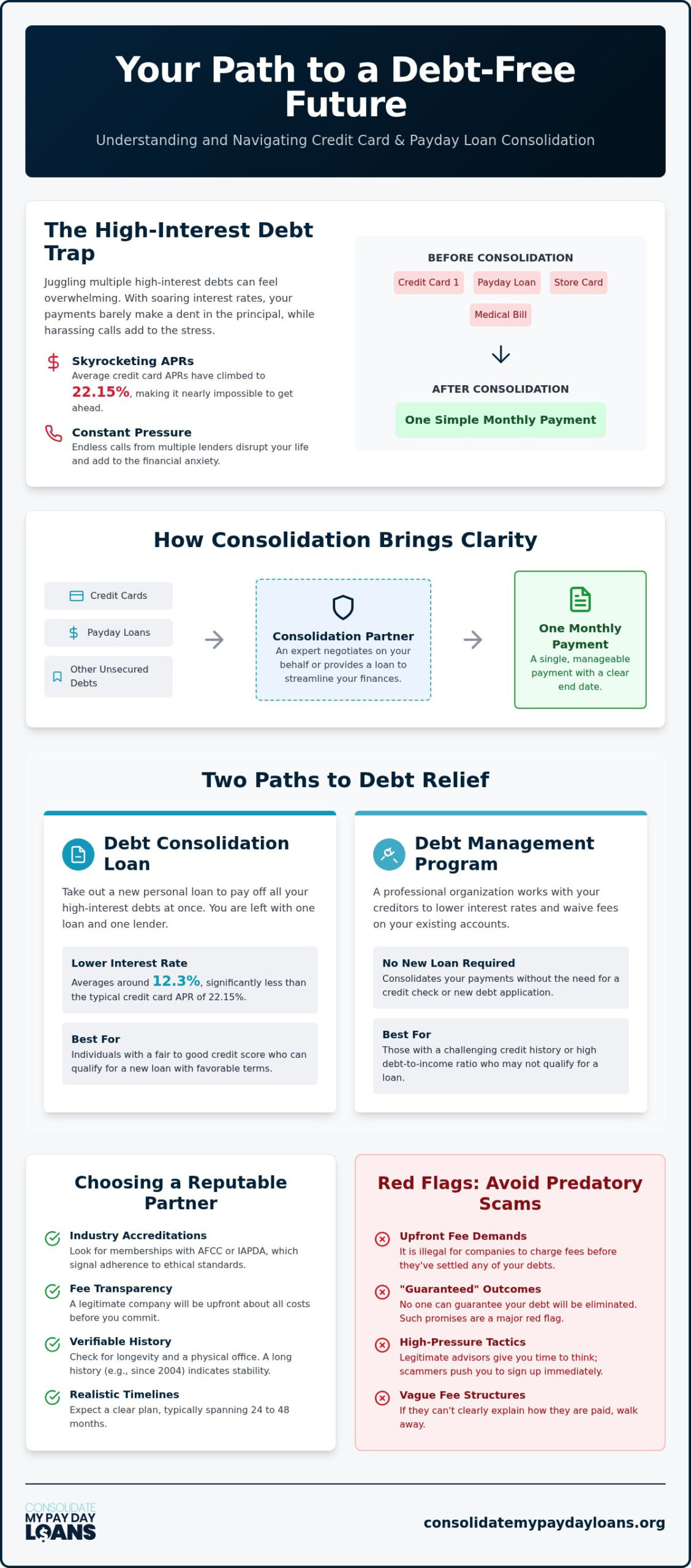
It’s vital to distinguish between refinancing and debt relief. Refinancing typically involves taking out a new personal loan at a lower interest rate, which averaged approximately 12.3% in 2026, to pay off higher-interest cards. Relief programs focus on negotiating with lenders to lower rates or waive fees on your current accounts. Both paths aim for the same result: a faster exit from debt and lower costs.
The Role of a Debt Consolidator
A consolidator acts as a professional intermediary between you and your creditors. This role is essential because it removes the emotional friction of dealing with aggressive collection departments. They simplify your financial life by reducing the number of due dates you must track every month. Instead of juggling five or ten different payments, you focus on one. More importantly, they provide a structured timeline. You’ll know exactly when you’ll be 100% debt-free, which offers immense psychological peace of mind.
Common Debts Covered by Consolidation
Most unsecured obligations can be rolled into a single plan. This includes high-interest credit card balances, retail store cards, and unsecured personal loans. Medical bills are also frequently included. However, many traditional lenders ignore the most damaging form of debt. We specialize in the specific challenge of consolidating payday loans alongside your credit cards. These high-cost loans often act as an anchor that prevents you from ever paying off your credit cards. A unified strategy ensures every creditor is addressed simultaneously.
How to Evaluate and Compare Consolidation Providers
Choosing between various credit card consolidation companies requires more than just a quick search. You need to know How to Evaluate and Compare Consolidation Providers to ensure your financial safety. Start by checking for industry accreditations. Reputable firms typically hold memberships with the American Fair Credit Council (AFCC) or the International Association of Professional Debt Arbitrators (IAPDA). These credentials indicate that a company adheres to strict ethical standards and regulatory compliance.
Transparency is your next priority. A legitimate partner will be upfront about all fees and the total cost of the program before you commit. If a company avoids discussing their fee structure or promises a debt-free date that sounds too good to be true, it’s a major red flag. Realistic timelines usually span 24 to 48 months, depending on your total balance and cash flow. For those struggling with multiple types of high-interest debt, look for providers that offer a comprehensive payday loan hardship program. This ensures that your most aggressive debts aren’t left to fester while you focus on your credit cards.
Verification Checklist for Legitimacy
Before sharing sensitive financial data, verify the company’s background. Are they registered to operate in your specific state? Legitimate credit card consolidation companies maintain physical offices and a verifiable history of service. For instance, our parent company, Solid Ground Financial, has been operating since 2004. This longevity matters. It proves the company can weather shifting economic climates and maintain long-term relationships with creditors. Check independent reviews to see how they support clients during the program, especially when lenders become difficult or persistent.
The Importance of a Preliminary Consultation
Never sign a contract without a detailed debt analysis. A preliminary consultation is your chance to interview the expert. Ask specifically how they handle aggressive lenders or what happens if a creditor refuses to negotiate. They should provide tools to help you visualize the finish line, such as a payday loan consolidation calculator to model your potential savings. This transparency builds the trust necessary for a successful recovery. If you’re ready to see how these numbers apply to your specific situation, you can explore your relief options with a specialist today. This initial step is about information, not obligation.
Debt Consolidation Loans vs. Debt Management Programs
Choosing the right path to financial recovery depends largely on your current credit standing and the severity of your debt. While many people use the terms interchangeably, credit card consolidation companies typically offer two distinct solutions: a new loan or a structured management program. Understanding the mechanics of each is vital to ensure you don’t trade one problem for another. One is a financial product, while the other is a strategic service designed to dismantle debt from the inside out.
Pros and Cons of Consolidation Loans
A consolidation loan is a straightforward financial product. You take out a new personal loan to pay off your existing balances. In 2026, the average APR for a 24-month bank loan sits at 11.40%, which is significantly lower than the 22.15% average interest rate on credit cards. This creates immediate breathing room and provides a fixed monthly payment. However, these loans usually require a FICO score above 660 to secure the most favorable rates. The primary risk is behavioral. If you don’t change the spending habits that led to the debt, you might find yourself with a new loan payment and new credit card balances simultaneously.
Pros and Cons of Debt Management Plans (DMPs)
For those facing high debt-to-income ratios or the crushing weight of payday loan cycles, a debt management plan is often more effective. This isn’t a new loan; it’s a negotiated repayment strategy. You work with credit card consolidation companies to lower interest rates and waive fees on your existing accounts. This approach is particularly powerful because it can include high-interest payday loans that traditional banks often reject. It serves as a viable payday loan consolidation instead of bankruptcy option for many families. While you may need to close your credit card accounts during the program, the long-term benefit is a clear, supervised path to zero balance.
Your credit score will react differently to each method. A loan might cause a temporary dip due to a hard inquiry, but it often improves your score quickly by lowering your credit utilization ratio. A management plan might cause a more sustained dip as accounts are closed, but it builds a foundation of consistent, on-time payments. When considering A Unified Strategy for Credit Cards and Payday Loans, the goal is long-term stability rather than a quick score boost. Both methods aim to stop the cycle of late fees and harassing calls, giving you back your mental peace of mind.
Red Flags: Avoiding Predatory Consolidation Scams
When you are drowning in debt, any hand reaching out looks like a lifeline. Unfortunately, some credit card consolidation companies are actually predatory traps designed to exploit your stress. You must remain vigilant against ‘guaranteed’ results regardless of your financial situation. No legitimate organization can promise exactly how a creditor will react before negotiations begin. If a representative uses high-pressure sales tactics to rush you past the fine print, hang up immediately. They are counting on your desperation to hide the details of a ‘new loan’ trap that might just roll your current debt into another high-interest product.
The ‘Upfront Fee’ Warning
The Federal Trade Commission’s Telemarketing Sales Rule is your strongest defense against scams. This regulation strictly prohibits debt relief companies from charging any fees before they have successfully renegotiated or reduced your debt. This means you should never pay for the promise of help. Legitimate credit card consolidation companies structure their fees based on performance or through transparent, manageable monthly service charges. Predatory lending is a practice that intentionally traps borrowers in a cycle of debt. If a firm demands thousands of dollars before making a single call to your lenders, they are violating federal law and should be reported.
Analyzing the ‘Too Good to Be True’ Offer
Marketing claims like ‘cut your debt by 80%’ are almost always misleading hooks. While significant reductions are possible through professional negotiation, such extreme numbers usually refer to debt settlement rather than true consolidation. Settlement involves intentionally stopping payments and letting accounts go into default. This can lead to lawsuits and devastate your credit for years. True consolidation focuses on management and interest reduction to keep you in good standing. Always verify if a company is actually affiliated with the lenders they claim to negotiate with. Legitimate firms are open about their process and will encourage you to take your time.
Recovering from debt requires a partner who respects your agency. It’s about finding a sustainable exit plan, not a quick fix that leaves you worse off. If you are ready to speak with an advocate who understands the nuances of the industry, you can view our debt relief standards to see what a legitimate partnership looks like. This transparency is the foundation of your future financial peace.
A Unified Strategy for Credit Cards and Payday Loans
Many credit card consolidation companies focus solely on revolving balances. This narrow approach often fails because it ignores the high-velocity “anchor” of payday debt. If you’re paying 400% APR on a short-term loan, you’ll never have enough cash to pay down a credit card balance, even at 22% APR. You need a unified exit strategy that addresses both obligations simultaneously. This holistic view ensures your recovery isn’t sabotaged by the most aggressive lenders in your portfolio. By merging these debts, you regain the ability to prioritize your long-term stability over daily survival.
Stopping the Payday Loan Cycle First
Payday loans require immediate intervention to protect your bank account. These lenders often use ACH authorizations to drain your paycheck the moment it’s deposited. This leaves nothing for essential living expenses like food or rent. When you work with a specialist, you stop the weekly rollover trap that compounds interest so rapidly. Professional payday loan relief creates immediate cash flow by restructuring these high-cost obligations into a predictable monthly plan. It stops the financial bleeding so you can focus on the bigger picture of your total debt.
Long-Term Credit Card Stability
Once the volatility of payday loans is stabilized, you can move from a “minimum payment” cycle to a principal-reduction mindset. Most people are trapped in a loop where their payments barely cover the interest. A structured plan from reputable credit card consolidation companies merges your various balances into a single, manageable obligation. This simplification prevents missed due dates and the late fees that often follow. It shifts your financial posture from defensive to offensive. You aren’t just reacting to crises; you’re actively reducing what you owe every single month.
Regaining control over your financial life is a methodical process. It requires a partner who understands how different types of debt interact to keep you stuck. The next step toward mental peace of mind is getting a free debt analysis. This provides a clear view of your potential savings and a concrete timeline for your recovery. You don’t have to navigate this turbulence alone. With professional advocacy and a structured relief plan, you can finally reclaim your agency and build a stable financial future.
Your Path to Financial Agency
Regaining control over your financial life starts with a single, informed decision. You now have the essential tools to distinguish between predatory lenders and legitimate credit card consolidation companies that prioritize your long-term recovery. By focusing on accredited partners and choosing a management plan that addresses both credit cards and payday loans, you can finally stop the exhausting cycle of high interest and late fees. This structured approach replaces constant financial turbulence with a predictable, steady path toward a zero balance.
It’s time to move past the daily stress of multiple due dates and harassing calls. Our team at Consolidate My Payday Loans brings over two decades of debt management experience through Solid Ground Financial, which has been helping individuals navigate these challenges since 2004. As specialized high-interest debt experts, we provide non-judgmental financial advocacy to help you rebuild your stability and regain your personal agency.
Estimate your savings and start your recovery with our consolidation tools today.
The journey toward mental peace and financial freedom is within your reach. Take that first step toward a simpler, more manageable future and start your recovery today.
Frequently Asked Questions
Is it a good idea to consolidate credit card debt?
Consolidating is a strategic choice when high interest rates prevent you from reducing your principal balance. It replaces multiple due dates with a single, manageable payment. This simplification reduces the risk of late fees and provides a clear timeline for becoming debt-free. However, it only works if you address the underlying spending habits that created the debt. It’s a tool for recovery, not a magic fix for chronic overspending.
How much does it cost to use a debt consolidation company?
Costs vary depending on the type of program you choose. Legitimate credit card consolidation companies don’t charge upfront fees before they provide results. Instead, they typically earn revenue through monthly management fees or a percentage of the debt saved through negotiation. Always ask for a transparent breakdown of total costs before signing. Understanding these fees ensures you don’t trade one financial burden for another during your recovery process.
Will credit card consolidation hurt my credit score?
You may see a temporary dip in your credit score during the initial stages. This happens because of hard credit inquiries or the closing of accounts required by some management plans. However, the long-term impact is often positive. By ensuring consistent, on-time payments and lowering your overall credit utilization ratio, consolidation builds a stronger financial foundation. It’s a strategic trade-off that prioritizes total debt elimination over a temporary score fluctuation.
Can I consolidate my payday loans and credit cards together?
Yes, you can merge both types of debt into a unified relief plan. Many traditional banks reject payday loans, but specialized credit card consolidation companies understand how these high-interest anchors sabotage your progress. Combining them stops the aggressive withdrawals from payday lenders while simultaneously lowering your credit card interest. This holistic approach ensures your entire debt portfolio is managed under one structured strategy, providing much-needed cash flow and mental relief.
What happens if I can’t qualify for a consolidation loan?
If your credit score prevents you from qualifying for a traditional bank loan, a debt management or relief program is your best alternative. These programs don’t require a new loan. Instead, they focus on negotiating with your existing creditors to lower interest rates and waive fees. This path is often more effective for individuals with high debt-to-income ratios or those trapped in payday loan cycles where new credit is unavailable.
How do I know if a debt consolidation company is legitimate?
Legitimacy is marked by transparency and industry accreditation. Look for memberships in the American Fair Credit Council (AFCC) or the International Association of Professional Debt Arbitrators (IAPDA). A reputable firm will have a verifiable history, such as our parent company, Solid Ground Financial, which was established in 2004. Avoid any company that guarantees results or demands large upfront payments, as these are clear violations of Federal Trade Commission regulations.
Can I still use my credit cards after I consolidate them?
Most consolidation programs require you to stop using the credit cards included in the plan. In many cases, accounts are closed or frozen to prevent you from accumulating new debt while paying off the old balance. This is a protective measure designed to ensure your progress isn’t undone by new charges. While it requires a lifestyle adjustment, it’s a necessary step toward regaining your personal agency and achieving total financial freedom.
How long does the consolidation process typically take?
The timeline for total debt elimination typically ranges from 24 to 48 months. This duration depends on your total debt load, your monthly cash flow, and the specific negotiation terms reached with your creditors. Unlike the “minimum payment” trap that can last decades, a structured consolidation plan provides a fixed end date. You’ll know exactly when you’ll be debt-free, which offers the psychological peace of mind needed to stay committed.