
Your 0% APR end date is a planning deadline, not a repayment surprise. If you’re asking what to do when 0% APR on a credit card expires, start by finding the promotional end date and the regular APR in your card agreement or account statement. Once the offer ends, the regular rate generally applies to any eligible balance left, so a payment that felt manageable at 0% can become harder to keep up with.
That shift can feel stressful, especially if you still owe more than you can repay before the deadline. Acting early gives you time to compare your options. This guide explains what changes when the promotion ends, how to distinguish a true 0% APR offer from deferred interest, and how to weigh a payoff plan, balance transfer, or consolidation against your budget. A balance transfer can involve fees and a new promotional deadline, so compare the full terms, not just the headline rate. You’ll leave with a practical next step for reducing the balance and avoiding preventable fees.
Key Takeaways
- To decide what to do when 0% APR on a credit card expires, first find the promotion’s end date and the APR that may apply afterward.
- Record your current balance, minimum payment, due date, and recent transactions to build a practical payoff plan.
- Compare paying down the card, transferring the balance, and consolidation by eligibility, timing, fees, repayment terms, and the habits each option requires.
- Set a realistic repayment amount after accounting for essential expenses, and prioritize making at least the required payment on time.
- If payments feel unaffordable or you’re relying on credit to manage multiple balances, consider whether credit card consolidation may help organize repayment.
When a 0% APR Credit Card Offer Expires, What Changes?
The end of a 0% introductory period changes the interest terms, not the balance due immediately. You still owe the amount on your account, and your payments remain subject to the card’s normal due-date and minimum-payment rules. The main change is that the regular APR may begin applying to an eligible promotional balance left after the offer expires.
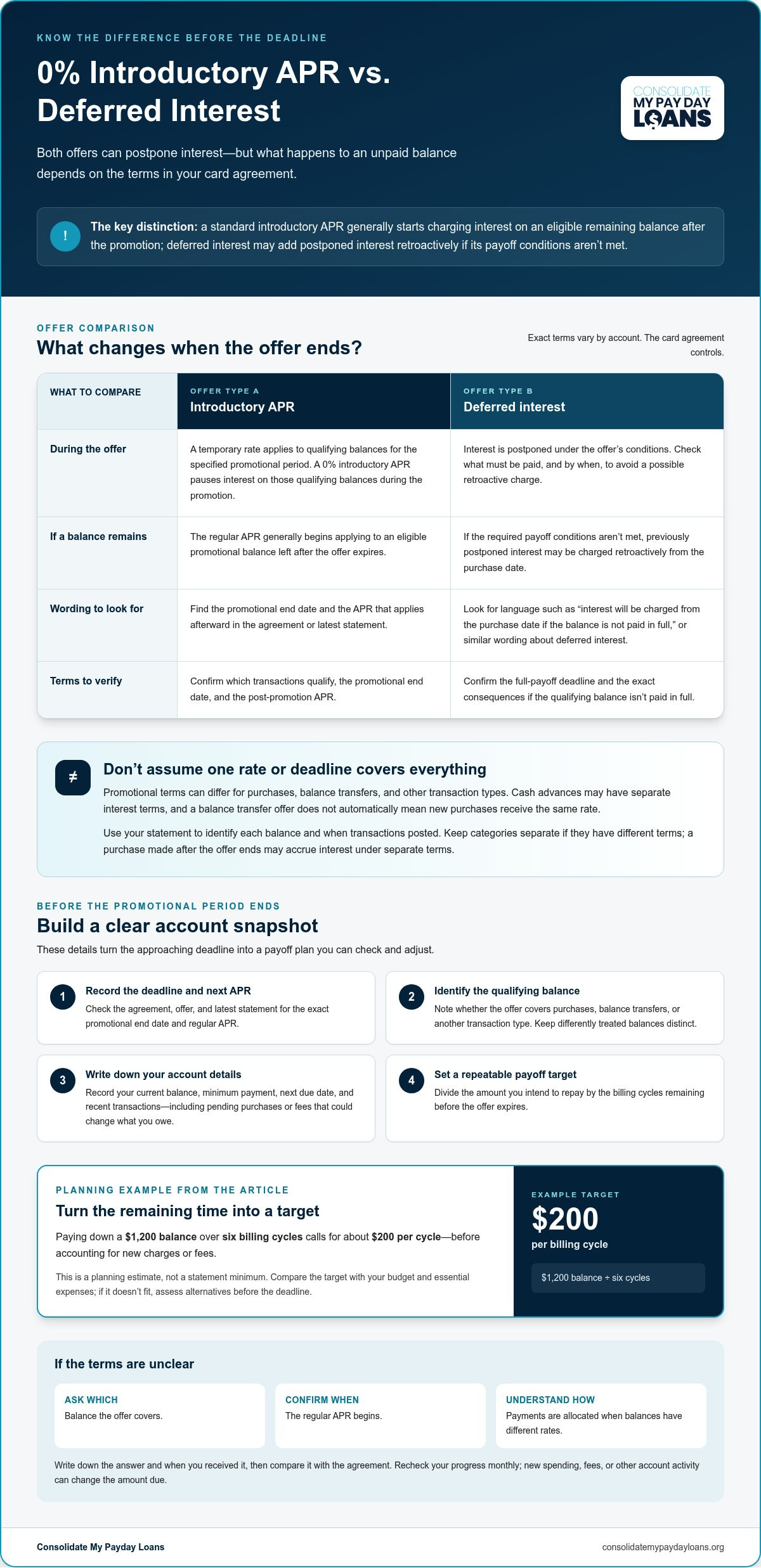
An introductory APR is a temporary interest rate offered for a specified period. When that period ends, the rate generally changes according to the card agreement. In short: A 0% introductory APR pauses interest on qualifying balances during the promotion; deferred interest may add previously postponed interest if the offer’s payoff conditions aren’t met. The distinction matters. For general background on how a Credit card works, your card agreement is still the place to find the terms that apply to your account.
If you’re deciding what to do when 0% APR on a credit card expires, look up three details in your agreement and latest statement: the exact promotional end date, which transactions qualify, and the APR that applies afterward. Don’t assume every balance on the card has the same rate or deadline.
Which balance and transactions does the promotion cover?
A promotional rate can apply to purchases, balance transfers, or a specific transaction category, but the terms may differ. A balance transfer offer, for example, doesn’t automatically mean new purchases receive the same rate. Cash advances may also have separate interest terms. Check the agreement for the eligible balance, promotional dates, and rates for each transaction type. Review recent activity, too: a purchase made after the offer ends may accrue interest under separate terms, even if an older qualifying balance had a promotional rate.
Use your statement to identify what you owe and when each transaction posted, then compare those details with the offer terms. If the statement separates balances by category, keep the amounts distinct in your notes. This helps you avoid assuming one promotional end date or APR applies to everything.
Introductory APR versus deferred interest: why the wording matters
Deferred interest is a distinct offer structure, not another name for a standard 0% introductory APR. With a typical introductory APR, interest begins on an eligible remaining balance after the promotional period ends. With deferred interest, the offer may require the full qualifying balance to be paid by a deadline. If it isn’t, interest that was postponed may be charged retroactively from the purchase date. The agreement controls the exact consequences.
Look for wording such as “interest will be charged from the purchase date if the balance is not paid in full,” or similar language about interest being deferred. Don’t rely on the offer’s headline alone. If the terms are unclear, use the card issuer’s current written disclosures or consumer guidance to understand how the offer works before choosing a payoff strategy. Knowing which structure applies helps you set the right deadline and avoid an unexpected interest charge.
How to Prepare Before Your 0% APR Period Ends
A clear account snapshot turns an approaching deadline into a plan you can adjust. Start early enough to compare your options instead of making a rushed decision just before the promotional rate ends.
- Find the expiration date and post-promotion APR. Check your card agreement, promotional offer, and latest statement. Record the date the introductory rate ends and the regular APR that may apply afterward.
- Identify which balance qualifies. Note whether the offer covers purchases, balance transfers, or another transaction type. Keep separate balances distinct if they have different terms.
- Write down your account snapshot. Record the current balance, minimum payment, next due date, and recent transactions. Include pending purchases or fees that could change what you owe.
- Estimate a monthly payoff target. Divide the amount you intend to repay by the number of billing cycles left before the offer expires. For example, paying down a $1,200 balance over six cycles calls for about $200 per cycle, before accounting for new charges or fees. This is a planning estimate, not a statement minimum.
- Compare the target with your budget. Decide whether you can make that payment while covering essential expenses and required payments on other accounts. If not, use the gap to assess alternatives before the deadline.
Planning early gives you room to compare a payoff schedule, a balance transfer, or another approach without choosing under deadline pressure. For background on introductory offers, the Consumer Financial Protection Bureau on 0% APR offers explains the basic terms. A written plan also makes it easier to spot changes in your balance or schedule.
Build a payoff timeline from your statement
Use your latest statement to confirm the balance and payment due date, then count the billing cycles remaining before the promotional end date. Divide the amount you intend to repay across those cycles to set a repeatable target. Check your progress each month. New spending, fees, or other account activity can increase the amount due, so recalculate instead of relying on an outdated estimate.
Contact the card issuer with specific questions
If the documents leave room for doubt, ask which balance the offer covers, when the regular APR begins, and how payments are allocated when different balances have different rates. Write down the answer and when you received it, then compare it with the agreement and account statements. To evaluate whether a structured repayment approach may fit, explore credit card consolidation as one possible option.
Knowing what to do when 0% APR on a credit card expires starts with details you can verify: the deadline, eligible balance, and a payment target grounded in your budget. Keep those figures together and revisit them after each statement.
Compare Your Options When You Cannot Pay Off the Balance
If your budget can’t clear the promotional balance in time, compare the full repayment path for each option, not just the initial rate or monthly payment. Eligibility, timing, fees, repayment length, and the effort required to avoid new debt can all affect whether an approach is manageable.
| Option | Eligibility | Timing | Fees and repayment term | Discipline required |
|---|---|---|---|---|
| Pay down the existing card | No new account approval is needed. | You can start making extra payments now. | The regular APR may apply to eligible remaining balances after the offer ends. Repayment continues under the card’s terms. | Keep to a realistic payment target and limit new charges. |
| Transfer the balance | Approval and the amount you can transfer depend on the issuer and account. | Allow time for approval and processing. Keep paying the current card as required until the transfer posts. | Review any transfer fee, promotional period, post-promotion APR, and repayment terms. | Pay down the transferred balance before its offer ends and avoid running up the old card again. |
| Consolidate eligible balances | Eligibility depends on the arrangement and the balances included. | Allow time to understand the terms and set up the repayment approach. | Compare all fees, the total repayment terms, and the monthly commitment. | Follow the agreed repayment plan and avoid adding debt that strains the budget. |
When a balance transfer may or may not fit
A new 0% offer isn’t guaranteed. Qualification, transfer limits, fees, and offer length vary by issuer, and the transfer may not cover your full balance. Compare the promotional window with a realistic payoff timeline. If you can’t reasonably repay within it, check what rate and terms follow. A new offer can create breathing room, but without a payment plan it may only move the deadline.
When consolidation deserves consideration
Consolidation may bring eligible unsecured balances into a more structured repayment arrangement, depending on its terms. That can make repayment easier to track, but it doesn’t automatically lower the total cost or make payments affordable. Compare the full repayment terms, fees, and monthly commitment with what you can sustain. If you’re managing both card and payday loan debt, review credit card and payday loan consolidation as a framework for considering both types together.
The right response to what to do when 0% APR on a credit card expires depends on the terms you qualify for and the payment you can maintain. Choose the option that gives you a clear, realistic route to reduce the balance, and read the details before committing.
Create a Repayment Plan That Fits Your Budget
A repayment target only works if it fits your real monthly cash flow. Build your plan around take-home income, essential expenses, and required payments on every account. Then decide how much you can consistently direct toward the remaining card balance. A sustainable pace is more useful than an ambitious figure that leaves you short before the next paycheck.
Start by writing down:
- Your take-home income and necessary costs, such as housing, utilities, food, transportation, and healthcare.
- The minimum payment and due date for each debt.
- The amount left after those commitments that you can realistically put toward repayment.
Prioritize at least the required payment by its due date. Before sending extra money, check the issuer’s payment-allocation terms. If the account has balances with different APRs or promotional terms, an extra payment may not be applied as you expect. Confirm how payments are allocated, then direct additional funds toward your intended balance when the account rules allow it.
Set a sustainable payment amount
Base your payment on income you can count on, not an optimistic estimate of overtime or other uncertain money. If the amount needed to meet your target isn’t affordable, extend the timeline and reassess your options rather than skipping required payments or taking on new borrowing as a shortcut. A realistic plan can still make progress, and you can increase payments later if your budget allows.
Reduce the chance of missed payments
Use a calendar reminder before each due date, or consider automatic payment for at least the minimum if it suits your account and cash flow. Check that the payment posted, then review the next statement for fees, new charges, and changes in the balance. Issuer terms and account consequences can vary, so confirm the rules in your agreement and current account information.
Make the plan a routine, not a one-time calculation. After each statement arrives, compare the new balance with your target, note transactions or fees, and update the amount or timeline if needed. Revisit your budget when income or essential expenses change. If an unexpected bill means you can’t make the planned extra payment, protect essential costs and required minimums first, then revise the schedule instead of relying on a payment you can’t sustain.
When deciding what to do when 0% APR on a credit card expires, consistency and account awareness matter as much as the payment amount. Keep a simple record of due dates, minimums, extra payments, and remaining balances. If the numbers still don’t fit or managing the balance feels difficult, explore credit card consolidation options as one possible next step. Compare the terms and costs rather than assuming consolidation will lower them or guarantee a particular outcome.
When Credit Card Consolidation Could Be a Next Step
Reassess your approach if the payment you planned doesn’t fit your budget, you’re juggling several balances, or you keep using credit to cover routine expenses. Those signs don’t mean you’ve failed. They may mean your current plan needs another look before the remaining balance becomes harder to manage.
Credit card consolidation generally means bringing eligible card balances together under a repayment arrangement, with terms that depend on the specific approach. It’s different from opening a new card with an introductory APR: consolidation organizes repayment rather than extending a promotional rate. It may be worth evaluating if managing separate balances and due dates feels difficult, but it isn’t automatically cheaper or suitable for every household. Outcomes depend on your circumstances and the terms available. Don’t assume approval, savings, or a credit-score change.
Questions to answer before choosing a path
Compare more than the proposed monthly payment. Look at the total repayment obligation, any fees, the payment schedule, and what the agreement says could happen if you miss a payment. Test the required payment against your household budget for the full plan, including months when expenses may be less predictable. A payment that works only in an unusually good month may not be sustainable.
If payday loan balances are part of the same strain, include them in your overall picture. Payday loan consolidation options can help you consider that debt type alongside your card balances, without treating the two as identical obligations.
Take one manageable next step
Gather the documents that make your situation easier to assess: recent statements, promotional offer terms, current balances, due dates, minimum payments, and a monthly budget. Together, these show what you owe, when payments are due, and what amount may fit after essential expenses. If a figure changes, update your notes rather than relying on an old estimate.
Then choose one action you can maintain, whether that’s following a revised payoff schedule or comparing a consolidation arrangement. Don’t wait for the promotional rate to change before reviewing your choices, and don’t commit based on a headline or payment figure alone. Read the full terms and consider how the plan fits your budget over time.
If you’re still weighing what to do when 0% APR on a credit card expires, you can explore a structured option as one possible path. Explore credit card consolidation for a balance that’s difficult to manage.
Choose a Next Step You Can Keep
The end of a promotional rate doesn’t have to dictate your next move. Choose a response you understand and can sustain rather than waiting until pressure narrows your choices. If you’re still deciding what to do when 0% APR on a credit card expires, use your account details and budget to guide that decision, and leave room to adjust if circumstances change.
If managing the balance alone feels difficult, structured credit card consolidation may be worth exploring. Consolidate My Payday Loans provides credit card consolidation, as well as payday loan consolidation and relief services for people facing those separate debt challenges. The right fit depends on your situation and the applicable terms, so consider whether the approach matches your needs.
Explore credit card consolidation options and take a considered step toward a repayment plan that feels more manageable. You can move forward one practical decision at a time.
Frequently Asked Questions
Can a credit card issuer extend a 0% APR offer?
Possibly, but don’t count on an extension unless the issuer confirms it. An issuer may choose to make a new or extended offer, but the terms, eligibility, and length can differ from your current promotion. Contact the issuer before the expiration date if you want to ask. Keep making required payments and plan for the scheduled end date unless you receive clear confirmation that the offer has changed.
Can an expired 0% APR cause interest to be charged retroactively?
Usually, a true 0% introductory APR doesn’t trigger retroactive interest on the promotional balance simply because the offer ends. Deferred-interest offers are different: their terms may allow previously postponed interest to be charged if you don’t meet the stated payoff conditions. Check your offer for wording about interest being charged from the purchase date. If the language is unclear, ask the issuer to explain how it applies to your account.
What happens to new purchases after a 0% APR offer expires?
New purchases are generally subject to the purchase APR and grace-period terms in effect when you make them. If the promotion applied only to an earlier balance, it may not have covered new transactions even before expiration. If you carry a balance, you may not have the usual interest-free grace period on purchases. Review your agreement and statement, and consider pausing new charges if they make repayment harder.
Does carrying a balance after a 0% APR offer ends hurt your credit score?
Carrying a balance doesn’t automatically lower your score, but the balance compared with your credit limit may affect credit utilization, a factor considered by many scoring models. For example, a balance that takes up a large share of an available limit could have a different effect than a small one. Scoring models vary, and no single factor determines your score. On-time payments and monitoring your reported balances can help you stay informed.
How can I find the exact date my 0% APR ends?
Check the original offer terms, card agreement, and recent statements, then look in your online account for a promotional-rate expiration date. The wording may refer to a specific date or the end of a billing cycle, so read it carefully. If the documents show different dates, ask the issuer which one applies to the qualifying balance and note the answer. Knowing the exact deadline helps you avoid planning around an assumption.
How are payments applied when a card has promotional and regular-rate balances?
Payment allocation can depend on your account terms and the types of balances on the card. The required minimum and any amount you pay above it may be treated differently, so don’t assume an extra payment will go to the balance you intended. Check the agreement or statement for allocation details, then review your next statement to see how the payment was applied. Ask the issuer about any unclear balance category or transaction.
Can I keep using my credit card after the 0% APR period ends?
Usually, the end of a promotional APR doesn’t by itself close your card, so you may still be able to use it. New purchases will be subject to the account’s current terms, and available credit may be limited by the balance you’re carrying. Issuers can also change account access under their terms. Before making a purchase, consider whether it fits your budget and whether it could slow repayment of the existing balance.