
A payoff offer is only as strong as the budget behind it and the written terms that follow. If you’re wondering how to negotiate a payday loan payoff, start by figuring out what you can genuinely afford, not by agreeing to a number that puts your next bills at risk.
It’s understandable to feel unsure what to say when fees are adding up or a lender is pressing for payment. Prepare a realistic offer, ask clear questions, and remember that the lender may not accept your proposal.
This guide explains how to review your balance, set an offer based on available funds, and discuss payoff, settlement, or payment-plan terms. You’ll learn what to get in writing before sending money, including the amount due, deadlines, and how the payment will be applied. If one loan isn’t manageable or you’re dealing with several payday loans, Consolidate My Payday Loans provides payday loan consolidation and relief services as a separate structured option. The goal is a clear, documented plan you can afford, not another agreement that leaves you short.
Key Takeaways
- Learn how to negotiate a payday loan payoff by grounding your offer in your actual budget and available funds.
- Gather your loan agreement, recent statements, payment history, and lender details before starting the conversation.
- Compare a full payoff quote, a reduced settlement proposal, and installments. Lender responses can vary.
- Ask for the agreed amount, due date, payment method, and account outcome in writing before you pay.
- If multiple loans make direct negotiations difficult, consider payday loan consolidation or relief as a separate structured option.
How to negotiate a payday loan payoff when the balance feels unmanageable
Payday loan debt can feel overwhelming, especially when the amount due is hard to reconcile with everyday expenses. Asking the lender about options is a practical first step, but it doesn’t mean the lender will agree. Focus on finding out what it will consider and discussing only terms you could realistically meet.
Here, “payoff negotiation” means discussing one of three possibilities: paying the full amount the lender says will satisfy the account, proposing a settlement under different terms, or arranging installments. A lender may decline a proposal, and there’s no guaranteed reduction or acceptance. The options can depend on your agreement, the account’s status, the lender’s policies, and applicable rules.
This is different from taking out a new loan or renewing an existing one. A new loan creates another borrowing obligation, while a renewal or rollover may extend the existing debt under new terms. Neither is the same as agreeing with the lender on how to resolve the current account. For background on how these loans work, see this overview of the Payday loan.
What does negotiating a payday loan payoff mean?
A payoff quote is the amount the lender says is needed to satisfy the account; a settlement is a proposed agreement to resolve the balance under specified terms; and a payment plan spreads repayment across agreed installments. Ask what each option requires and how the lender will treat the account after you meet the terms. Don’t assume a partial payment settles the debt unless the lender confirms that in the agreement.
A quote may have conditions, such as a deadline or a required payment method. If you’re offered installments, clarify the amount and timing of each payment. These details help you distinguish a completed payoff from a temporary arrangement.
What should you know before contacting the lender?
Keep the conversation calm and factual. Explain what you can afford, and don’t agree to an amount simply to end a stressful call. Your loan agreement and account status may affect the options available, and applicable rules can differ by location. Ask the lender to explain anything that’s unclear before you commit.
Keep notes of what’s discussed, including the representative’s name, the date, and any proposed terms. A verbal conversation can clarify what the lender may consider, but it isn’t a completed agreement. Before paying, get the terms in writing and confirm how the payment affects the account.
Prepare a realistic payday loan payoff offer before you call
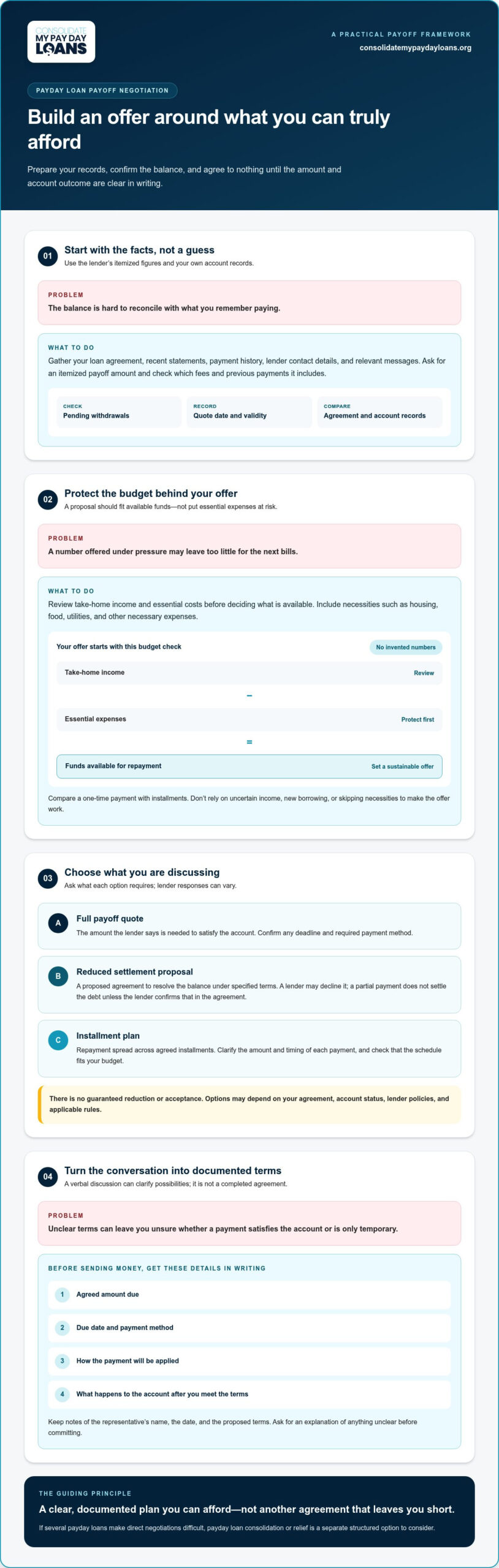
Preparation helps keep the conversation focused and lowers the risk of agreeing to terms your budget can’t support. Put the loan details and your current finances in front of you, then work through these steps:
- 1. Gather your records. Have the loan agreement, recent statements, payment history, and lender contact details ready. Note payments you’ve made and keep copies of relevant messages.
- 2. Confirm the balance. Ask the lender for an itemized payoff amount. Find out which fees and prior payments it includes, whether any withdrawals are pending, and the date through which the quote is valid.
- 3. Assess affordability. Review your income and essential expenses before setting aside money for repayment. Consider whether a lump sum or installments could fit without putting necessities at risk.
- 4. Define your offer. Choose a specific amount or installment proposal you can sustain. Don’t base it on money you hope to receive later or expect to borrow.
A written budget connects your offer to your actual income, essential expenses, and available funds. It’s more useful than guessing or promising an amount you may not be able to pay.
How do you work out what you can afford?
List your take-home income and essential costs, such as housing, food, utilities, and other necessary expenses. What remains can help you decide whether a payment is sustainable. Compare a one-time payment with installments: a lump sum may resolve the account sooner if the lender agrees, while installments need to fit each payment period. Don’t promise an amount that depends on uncertain income, new borrowing, or skipping necessities.
What loan details should you verify first?
Compare the lender’s itemized payoff with your agreement and recent account records. If the figures differ, ask how fees, payments already made, and pending withdrawals appear in the balance. Record the quote date and validity period, the representative’s name, and what they said. These notes can help you resolve misunderstandings before making an offer or sending payment.
If this balance is one of several payday loans, Consolidate My Payday Loans provides payday loan consolidation to combine multiple loans into one manageable monthly payment. Its calculator can help you estimate potential savings and debt reduction as you consider your next steps. Explore payday loan consolidation options separately from a direct payoff negotiation.
Will a payday lender accept less, or offer a payment plan?
Possibly, but there’s no standard outcome. A lender may provide a full payoff quote, consider a reduced settlement, offer installments, or decline your proposal. Its response can depend on its policies, your account circumstances, and applicable rules. An offer doesn’t guarantee a discount, stop fees or collection activity, or determine how the account will be handled.
When deciding how to negotiate a payday loan payoff, compare what each option requires, not just whether it sounds like relief. Get the terms in writing before paying, and don’t assume a payment or verbal discussion changes the account’s status.
What is the difference between a settlement and a payment plan?
None of these options guarantees a particular credit-score result. Reporting consequences depend on how the account is handled and whether information is reported. Ask the lender what it will report, and don’t rely on a promise about your score.
What if the lender refuses your offer?
A refusal doesn’t mean you should accept terms your budget can’t sustain. Ask what other repayment arrangements the lender can consider, then compare any proposal with your essential expenses and available funds. If a suggested payment depends on borrowing more or missing necessities, pause before agreeing.
Consumer-protection guidance and state rules can vary and may change. Check current details that apply to your location and account before relying on a legal requirement or assuming a lender must accept a particular arrangement. Keep a record of the discussion and request written terms before making a payment.
How to make the offer, confirm the terms, and protect your records
Once you’ve settled on an affordable proposal, keep the conversation focused. The goal isn’t to win an argument. It’s to find out whether the lender will consider your offer and to get clear terms before paying. For help planning what to say, review this payday loan lender negotiation script.
What should you say when making a payoff offer?
Use a short outline rather than trying to memorize a speech:
- State the balance you’ve verified and ask the lender to confirm it.
- Explain briefly that the current payment terms don’t fit your budget.
- Propose the lump sum or installment schedule you can actually afford.
- Ask whether the lender can review the proposal and when you can expect a written response.
Keep your tone factual and calm. Don’t make threats, rely on legal claims you haven’t verified, or promise a payment that depends on uncertain income or borrowing. Knowing how to negotiate a payday loan payoff also means knowing when not to commit. If the proposal won’t leave enough for essential expenses, revise it before presenting it.
Which agreement details should be in writing?
Before sending payment, ask for written terms that clearly explain:
- The amount due and any fees included.
- Each payment date and the accepted payment method.
- How the lender will apply the payment and treat the account.
- What happens after the final payment, including whether any balance remains.
A verbal promise isn’t the same as a documented agreement. Compare the written terms with what the representative described, and resolve any differences before paying. If the document doesn’t say whether the account will be considered settled or paid in full after you meet the terms, ask for clarification in writing.
Save the agreement alongside your original loan records, statements, and messages. Keep payment confirmations or receipts, and note the date and details of calls. After completing the arrangement, request written confirmation that the lender received the payments and explain how the account was resolved. Organized records give you a clear trail if questions arise later.
Consolidate My Payday Loans also provides payday loan relief, including professional assistance negotiating with lenders and structured relief plans. If managing conversations feels difficult, especially across several loans, explore payday loan relief options.
When payday loan consolidation or relief may be a better next step
Direct negotiation may be manageable if you have one account, understand the balance, and can propose a payment that fits your budget. Coordinating several lenders, due dates, and separate arrangements can be harder. If you’re weighing a direct payoff negotiation against a broader plan, consider how many accounts you need to manage and whether the proposed payments are sustainable together.
Consolidation is a separate, structured approach to managing payday debt. Consolidate My Payday Loans combines multiple payday loans into one manageable monthly payment, with the aim of reducing interest rates and ending rollover cycles. Consolidation doesn’t guarantee a settlement, lower balance, lender acceptance, or savings. For an overview of how a broader repayment approach may work, read this payday loan consolidation guide. You can also explore the payday loan hardship program guide to learn about hardship options.
If direct negotiations or multiple payments are difficult to coordinate, review payday loan relief options. The company provides specialized assistance with lender negotiations and structured relief plans to help you consider a way to manage payday debt. Outcomes depend on individual circumstances.
When might direct negotiation be enough?
If you have one loan and can make a specific, affordable proposal, handling the conversation directly may be a practical starting point. Before agreeing, check that the terms address the whole balance and that every payment fits your budget. Keep the lender’s response and any agreement in writing, even if the arrangement seems simple. Clear records help you understand what you’ve agreed to and what remains due.
When could a structured relief plan help?
Several balances, repeated lender conversations, or payment demands that don’t fit your budget can make self-management harder. Payday loan relief offers a structured way to approach these challenges. Review the payday loan relief options to understand how lender negotiation assistance and a structured plan can support your next steps. A plan can help organize repayment, but it can’t guarantee that lenders will accept specific terms or that you’ll save a particular amount.
Take a clear next step toward managing payday debt
A realistic offer starts with the facts: confirm what the lender says you owe, decide what your budget can support, and compare a full payoff with settlement or installments. Lenders may not accept your proposal, so don’t rely on a discount or payment arrangement until you have the terms in writing.
Knowing how to negotiate a payday loan payoff can help you approach the conversation with more confidence. If one lender discussion isn’t enough or several accounts are difficult to coordinate, payday loan consolidation or relief may offer another structured way forward. Consolidate My Payday Loans provides these services, and its calculator can help estimate potential consolidation savings and debt reduction. Neither the services nor the estimate guarantees lender acceptance or a particular result.
Explore payday loan relief options and take a practical next step. Start with a plan grounded in what you can manage.
Frequently Asked Questions
Can you negotiate a payday loan payoff for less than you owe?
Yes, you can propose paying less than the stated balance, but the lender doesn’t have to accept. Whether it considers a settlement can depend on its policies, your account circumstances, and applicable rules. Before paying, get written confirmation of the agreed amount, deadline, and what the payment will resolve. Don’t assume an offer alone reduces the balance, pauses collection activity, or changes the account’s status.
Will a payday lender accept a payment plan instead of a lump sum?
A lender may consider installments, but acceptance and terms vary. A payment plan divides repayment over agreed dates and may make payments easier to manage, but it doesn’t necessarily reduce the total owed. Ask for the installment amounts, due dates, any fees, and how the arrangement affects the account. Compare the proposed schedule with your budget before agreeing, and request the terms in writing.
How do I ask a payday lender for a payoff amount?
Ask the lender for an itemized, current payoff quote that states the amount required to satisfy the account. Confirm which fees and past payments are included, whether any withdrawals are pending, and the date the quote is valid through. Keep your loan agreement and recent statements nearby so you can compare the figures. Request the quote in writing and save it with your account records.
What should I get in writing before paying a negotiated payday loan settlement?
Get written confirmation of the agreed settlement amount, payment deadline, accepted payment method, and any fees. The agreement should explain how the payment will be applied, whether any balance will remain, and how the lender will treat the account once you meet the terms. Resolve inconsistencies before sending money. Keep a copy of the agreement and save payment receipts or confirmations with your loan records.
Can negotiating a payday loan payoff affect my credit?
It can have credit-reporting consequences, but the outcome depends on how the account is handled and whether information is reported. Don’t assume a settlement or payment plan will produce a particular credit-score result. Before agreeing, ask the lender how it expects to report the account and keep a record of its response. Focus on understanding the agreement and completing only terms you can realistically maintain.
What happens if a payday lender rejects my payoff offer?
If the lender declines, ask what other repayment arrangements it may consider and review each proposal against your budget. Don’t accept payments you can’t maintain just to end the conversation. You can restate what you can afford and ask for the lender’s response in writing. If several loans make separate negotiations difficult, compare direct discussions with a structured relief or consolidation approach before choosing a next step.
Is payday loan consolidation different from negotiating directly with a lender?
Yes. Direct negotiation means discussing payoff or repayment terms with an individual lender. Payday loan consolidation is a separate, structured approach that combines multiple payday loans into one payment. It isn’t a new payday loan, and it doesn’t guarantee lower payments, savings, or lender acceptance. If you’re considering it, review the proposed terms and use a consolidation calculator to estimate potential savings rather than assume a specific result.