
A collection call can sound like a court decision, but it isn’t one. So, can a payday lender sue you? Yes. A lender or debt owner may sue over an unpaid loan, but a lawsuit isn’t automatic, and a collector’s threat doesn’t mean a case has been filed. First, identify what you’ve actually received.
If court papers arrive, the response deadline matters. This guide explains how to distinguish a lawsuit from collection contact, verify court documents, and respond rather than risk a default judgment. It also covers how filing deadlines and collection rules vary by state, and when legal help may be important, especially if you’re concerned about your wages or bank account.
After addressing any court response, you can consider practical ways to manage the debt. Payday-loan consolidation and relief may help organize repayment or negotiate with lenders, but they aren’t legal representation and can’t guarantee a lawsuit will stop. Start by identifying which stage you’re facing.
Key Takeaways
- Can a payday lender sue you? A lender or debt owner may take legal action over an unpaid debt, but collection contact alone doesn’t confirm that a case has been filed.
- A lawsuit may involve filing, service, an opportunity to respond, and a possible judgment. Procedures vary by state.
- If court papers arrive, keep every page and related record, find the response deadline, and follow the court’s instructions.
- Wage or bank-account collection may depend on a judgment, state rules, and applicable protections. Don’t assume what can happen without checking the process.
- Consolidation or debt relief may help organize repayment, but it doesn’t automatically dismiss a lawsuit or change a court deadline.
Can a payday lender sue you? The direct answer and what it depends on
Yes, a payday lender or the current owner of the debt may sue to collect an unpaid debt if it has a valid legal claim. A missed payment, a collector’s warning, or a threat to take you to court doesn’t establish that a lawsuit has been filed. The answer to “can a payday lender sue you” depends on details such as the loan agreement, who owns the account, applicable law, and the facts of the case.
A collection threat is not a filed lawsuit, and a filed lawsuit is not a judgment. These are different stages, with different consequences and possible next steps. State laws affect deadlines, procedures, and available remedies, so a phone call alone can’t tell you whether a lender will sue.
What can happen after a payday-loan payment is missed?
After a missed payment, the lender may contact you about the balance, fees, or repayment. A third-party collector may later handle the account, or the debt may be transferred to another owner. These events don’t follow a fixed timeline, and not every account goes through the same steps. For general background on payday-loan terms and controversy, see Payday loan.
Keep the stages distinct: lender or collector contact isn’t a court filing; filing a case doesn’t prove the claim; and a judgment is a court’s decision. If you’re unsure whether a case exists, look for official court documents and verify the case using contact information from the court’s official website or directory. Keep letters, emails, voicemails, account statements, payment confirmations, and the loan agreement together. Comparing these records can help you identify discrepancies and understand what the collector says you owe.
Does the lender still have the right to collect this debt?
The original lender may sell or assign an account, so the company contacting you may not be the business that issued the loan. Ask for clear information about the claimed balance and the company’s authority to collect. Compare the account details with your agreement and payment history. A different company name on a letter doesn’t, by itself, prove the debt is invalid, but you should understand who is making the claim before deciding how to respond.
State law may set a deadline, commonly called the statute of limitations, for filing certain debt-collection claims. The time limit and how it applies can depend on your state, the type of agreement, and other facts. If the deadline may have passed, don’t assume a collector can’t file. The issue may need to be raised in court, and the rules differ.
Be cautious about paying or acknowledging a debt in writing if you’re uncertain about its age or ownership. In some states, those actions may affect the time limit or other legal issues. Check the rules that apply where you live or seek legal advice before acting. This is general information, not a decision about your specific debt.
How a payday-loan lawsuit can move from filing to judgment
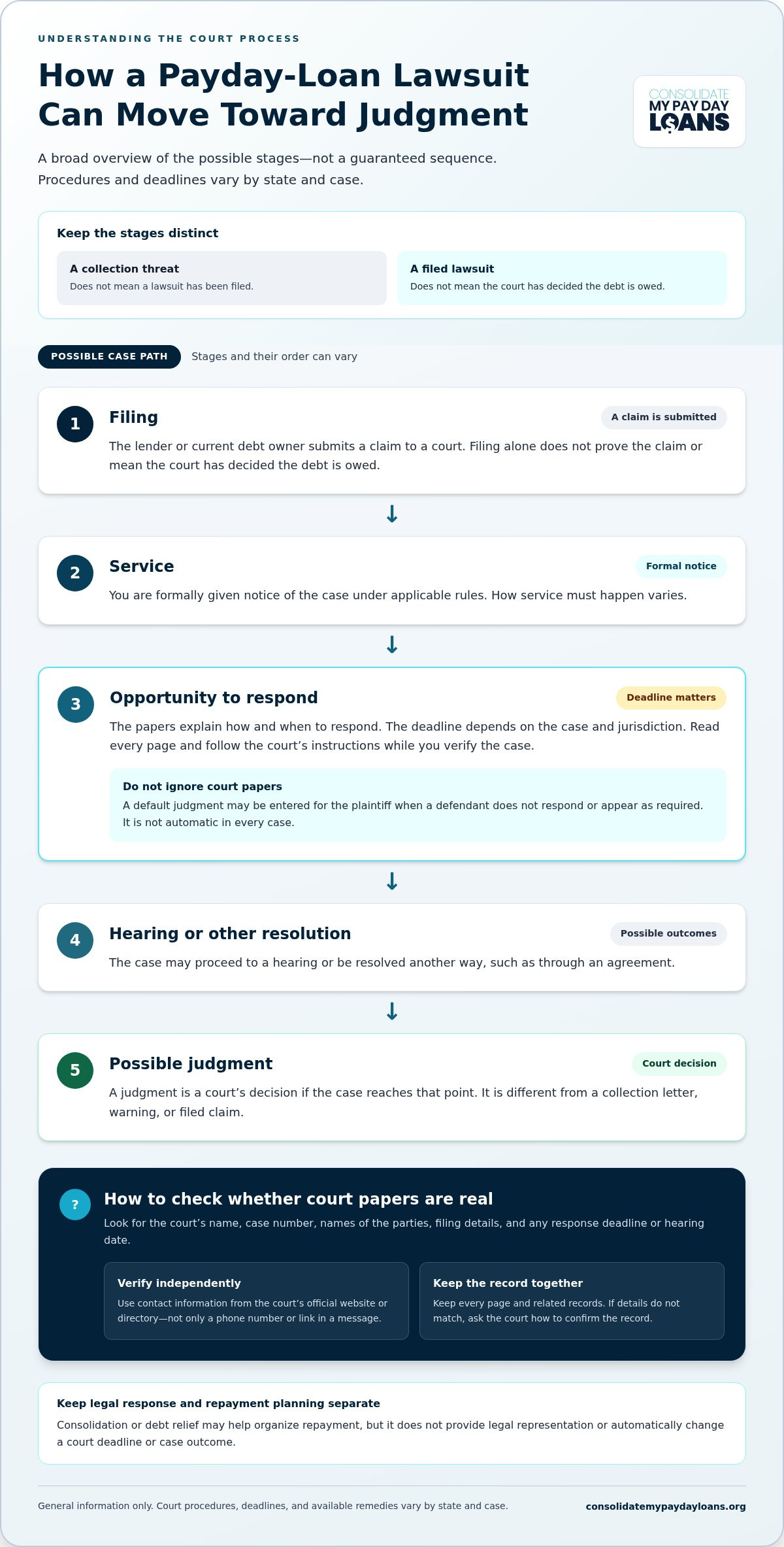
If you’re asking “can a payday lender sue you,” it helps to understand the steps between a lender’s decision to pursue a claim and a court’s decision. A case may involve filing, service of process, an opportunity to respond, and then a hearing, settlement, or another resolution. The details and order vary by state and case, so this is a broad overview, not a guaranteed sequence.
- Filing: The lender or debt owner submits a claim to a court. Filing doesn’t mean the court has decided the debt is owed.
- Service: You’re formally given notice of the case under applicable rules. How service must happen varies.
- Response opportunity: The papers explain how and when to respond. The deadline depends on the case and jurisdiction.
- Hearing or resolution: The case may proceed to a hearing or be resolved another way, such as through an agreement.
- Possible judgment: The court may issue a decision if the case reaches that point. A judgment is different from a collection letter or warning.
Court papers create a deadline. Don’t ignore them, even if you’re still checking whether the claim is accurate. Read every page and follow the instructions while you verify the case. For general information about debt-collection practices, the Consumer Financial Protection Bureau’s debt collection resources explain consumer protections and common collection issues.
How can you tell whether court papers are real?
Look for the court’s name, case number, names of the parties, filing details, and any response deadline or hearing date. A collector’s letter threatening legal action isn’t the same as a court-issued summons or complaint. To verify a case, use contact information you find independently through the court’s official website or directory, rather than relying only on a phone number or link in a message. If details don’t match, ask the court how to confirm the record.
What does a default judgment mean?
A default judgment is a court decision that may be entered for the plaintiff when a defendant doesn’t respond or appear as required. It isn’t automatic in every case; the court process and facts matter. If you learn that a judgment has been entered, act promptly. Whether it can be challenged or reopened depends on the circumstances and state law, so consider getting legal advice about your options.
Keep your legal response separate from your repayment plan. Payday-loan consolidation or relief may help organize repayment, but it doesn’t provide legal representation or automatically change a court deadline or case outcome. If you’re also considering ways to manage the debt, payday-loan repayment options may be a financial step to consider alongside addressing the court process.
What payday-loan lawsuits may mean for wages, bank accounts, and credit
A lawsuit can raise urgent concerns about your paycheck or the money in your account. But a collection call, a filed case, and a court judgment are different things, and each may have different consequences. A lawsuit filing alone is not permission to use post-judgment collection remedies. Whether a creditor can seek those remedies, and what protections apply, depends on the court process, state law, and your circumstances.
Before a judgment, a lender or collector may contact you to seek payment. Your account agreement may also involve scheduled withdrawals, which are different from a court-authorized collection action. Don’t assume a collector can garnish wages or take money from your account just because you missed a payment or received a lawsuit notice. The possible effects of a lawsuit depend on what happens in court, not just on the lender’s threat.
Can a payday lender garnish wages or take money from your account?
Wage garnishment or collection from a bank account may be possible after a creditor obtains a judgment and follows the legal procedures that apply. Rules vary by state and may depend on the type of income, account, and debt. Some funds or amounts may qualify for exemptions or other protections, but eligibility is fact-specific. Don’t assume a particular paycheck or deposit is protected without checking the rules for your situation.
If you receive notice that your wages may be garnished, your account may be frozen, or money has already been taken, act quickly. Save the notice and related account records, and seek qualified legal guidance promptly. A lawyer or legal aid organization can help assess deadlines, available protections, and steps to challenge an action if appropriate. Procedures and time limits may apply, so responding promptly matters.
Can a lawsuit affect your credit report?
A court case and a credit report are separate matters. A lawsuit filing or judgment doesn’t necessarily mean it will appear on your credit report. A lender or collector may report account information, and a collection agency may handle the account if it’s transferred or sold. Reporting practices vary, so check your current reports rather than relying on a collector’s warning.
If you see information you believe is inaccurate, keep a copy of the report and records that support your position, such as payment confirmations or correspondence. Use the appropriate dispute process with the credit reporting agency and the company that furnished the information, and keep copies of what you send. A credit-report dispute is separate from responding to a lawsuit, so don’t let one distract you from a court deadline. State laws, exemptions, and collection procedures differ; advice based on your location and facts can help you understand which protections may apply.
What to Do if a Payday Lender Sues or Serves You
Finding a summons in your mail can feel overwhelming. Keep the entire packet intact, including every page and the envelope. Gather the loan agreement, account statements, payment confirmations, and collection letters or messages. These records can help you identify who is making the claim and how the amount was calculated. Acting promptly preserves options, but it can’t guarantee a particular result.
What should you do first after receiving a summons?
Read the papers carefully and note the court, case number, named plaintiff, response deadline, and instructions for filing or appearing. The deadline depends on the court and state, so don’t rely on a general timeline. Don’t ignore the summons or assume that a phone conversation, payment discussion, or verbal promise changes what the papers require.
If anything is unclear, look for state-specific guidance from a qualified attorney, legal aid organization, or court self-help resource. These resources can explain how to follow the court’s process. A legal defense depends on the facts and applicable law, so a general checklist or online form isn’t a substitute for legal advice about your case.
How should you organize and check the debt information?
Compare the amount in the complaint with your agreement, account statements, payment history, and collection notices. Note differences without guessing at their cause. Record who contacted you, when they reached out, and what they said. Check whether the plaintiff named in the court papers matches the lender or account owner in your records.
Verify the filing and plaintiff through official court records or by contacting the court using independently located details. Keep copies of what you submit or receive, and make a simple timeline of important events. If you communicate with the lender or collector, stay factual and save the exchange. Don’t rely on an informal assurance instead of following court instructions.
Separate two tasks: responding to the court and deciding how to manage the debt. Questions about whether the claim is valid, the amount is correct, or a defense may apply call for a case-specific legal assessment. Debt negotiation or consolidation may help organize repayment, but it doesn’t automatically dismiss a filed case or extend a court deadline.
Once you’ve identified the court’s instructions and are addressing any legal response, consider whether payday-loan relief options could help you organize repayment or discuss the debt with lenders. Financial support is separate from legal advice or representation, so keep following the court process while you evaluate repayment options.
Addressing payday-loan debt while protecting your next steps
After identifying any court papers and response instructions, consider how to manage the debt itself. Keep the tasks separate: negotiating or consolidating a balance doesn’t automatically dismiss a filed case, pause court proceedings, or change a response deadline. A repayment discussion is not a substitute for responding to a lawsuit.
Payday-loan consolidation or relief may help organize repayment and, depending on the arrangement, involve discussing repayment with lenders. Whether an option fits depends on eligibility and its terms. Before agreeing, review which debts may be included, how payments are structured, whether fees apply, and what creditor participation is required. Don’t assume an arrangement changes a legal claim unless the court process or a formal agreement confirms that effect.
When might payday-loan consolidation or relief help?
If you’re managing several payday-loan balances, a structured approach may make repayment easier to track and help you understand your overall plan. Before enrolling, get a clear explanation of the terms, any applicable fees, how participating creditors are handled, and what happens if circumstances change or a payment is missed. Compare the proposed plan with your budget and account records. A financial program can support debt management, but it isn’t legal advice or a substitute for answering court papers.
How to choose a next step without losing sight of the case
If you’ve been served or a case has been filed, put the court’s deadline first. Follow the instructions and seek legal guidance relevant to your state if you need help understanding how to respond. Don’t wait for debt negotiations to finish before taking required steps in court, and don’t treat a lender’s verbal assurance as a change to the court’s schedule.
For broader planning, list each debt, the company currently contacting you, the claimed balance, and any repayment terms you’ve received. This makes it easier to assess whether consolidation or relief could make repayment more manageable. A payday-loan consolidation calculator can help estimate potential savings and debt reduction, but estimates aren’t a promise of results. Review actual terms before deciding.
Debt relief and legal protection serve different purposes. Financial support may help you organize repayment or negotiate with lenders, while legal guidance can help you understand a specific case and your obligations. Consolidate My Payday Loans offers payday-loan consolidation and relief to help borrowers organize repayment and work toward a structured plan. No repayment option guarantees that a lawsuit will stop or end a particular way.
Take a steady next step toward financial control
Uncertainty can make a debt feel larger than it is. Start with a clear plan: identify what needs attention first, gather the relevant records, and take one step at a time. The question “can a payday lender sue you” may bring real worry, but it doesn’t have to define every decision you make from here.
If court papers are involved, follow the court’s instructions and seek legal guidance for questions about your case. For the separate task of managing repayment, consider whether a structured approach could fit your circumstances and budget. Debt relief can support your planning, but it isn’t legal representation and can’t promise a particular court outcome.
When you’re ready to consider a practical repayment path, explore payday-loan relief options with Consolidate My Payday Loans. The company also offers a payday-loan consolidation calculator to estimate potential savings and debt reduction. Start with the option that best fits your needs and review its terms before making a decision.
Frequently Asked Questions
Can a payday lender sue you for not paying?
Yes, a lender or the current owner may sue over an unpaid debt if it has a legally enforceable claim. Whether it can collect depends on the agreement, account ownership, applicable law, and case facts. If you receive legal documents, check that the plaintiff and account information match your records. A collection call or demand letter alone doesn’t establish that a lawsuit exists.
Can a payday lender sue you after the statute of limitations expires?
A lender may still attempt to file, but an expired limitation period may provide a defense to a collection claim. The deadline depends on state law, the type of agreement, and other details, so don’t assume the period has run based only on the loan date. Before paying or acknowledging an old debt, get state-specific guidance because those actions may have legal effects in some states.
What happens if you ignore a payday-loan lawsuit?
Ignoring a case can leave the court with only the plaintiff’s side of the dispute. A judge may enter a default judgment if the required steps are met, though the result isn’t automatic in every case. If you discover a case late, promptly check its status with the court and ask a qualified legal resource whether a response or challenge may still be available.
Can a payday lender garnish your wages without a court judgment?
For an ordinary consumer debt, wage garnishment generally requires a judgment and the legal collection process that applies, but rules and exceptions vary. A lender’s request for payment isn’t authorization to take wages. If you receive a garnishment notice, review who issued it and the stated instructions promptly. A qualified legal adviser can help determine whether the action is valid and whether protections may apply.
Can a payday lender take money from your bank account?
A lender may have separate authorization to request an electronic payment, which is different from taking funds through a court collection process. A judgment creditor may be able to pursue an account under applicable procedures, subject to state rules and possible protections. Review your account agreement and bank activity to identify the type of transaction. If funds are frozen or withdrawn unexpectedly, contact your bank and seek legal guidance promptly.
Should you settle a payday-loan debt after being sued?
Settlement may be an option, but weigh the written terms against your records and ability to pay. Confirm which debt and balance the offer covers, when payment is due, and what the agreement says about resolving the claim. Don’t assume negotiations pause a court deadline. Before agreeing, understand how the settlement will be documented and whether a court filing or additional step is needed to close the case.
Can payday-loan consolidation stop a lawsuit?
No consolidation plan automatically stops or dismisses a lawsuit. A plan may help organize eligible debts into a structured repayment approach, depending on its terms and creditor participation, but it doesn’t replace a court response or legal advice. Keep meeting court deadlines while you assess repayment options. Review the agreement carefully so you understand what debts are included and what the plan does and doesn’t promise.